
Glencairn Museum News | Number 3, 2026
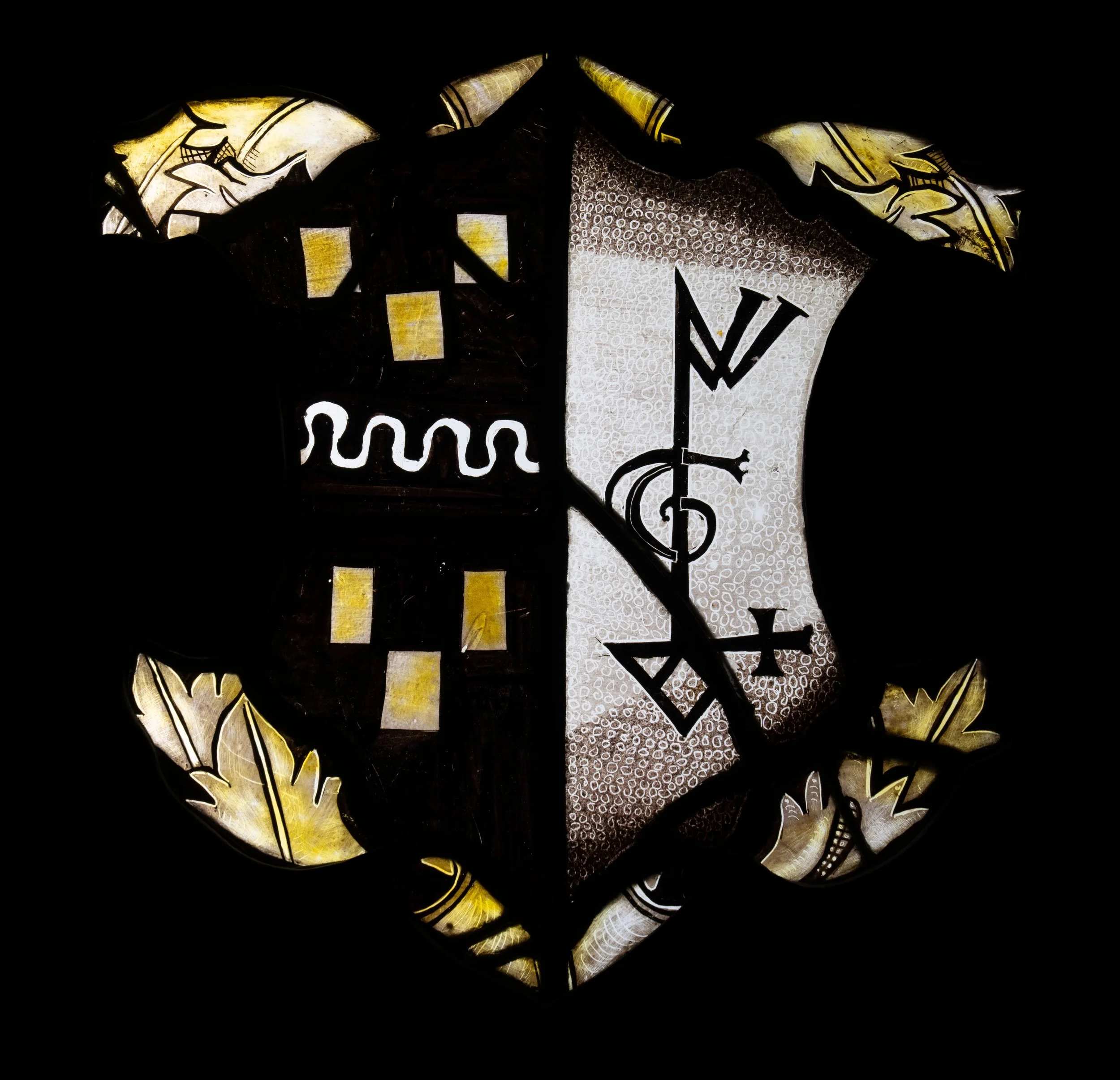
This 16th-century stained-glass panel from Norwich, England, in the Glencairn Museum collection features a heraldic shield and merchant's mark, reflecting the identity and status of a Norwich merchant (03.SG.106).
The Glencairn Museum collection encompasses almost 250 panels of medieval stained glass, mainly French and mostly before c. 1300. This article deals with a few of the exceptions, including five panels of fifteenth-century figurative glass, whose style places their manufacture in one of the several workshops operating in Norwich, the capital city of Norfolk, a large and prosperous county in the east of England. A sixth panel is heraldic and comes almost certainly from a house in the city of Norwich, and is of sixteenth-century date. Several questions can be asked of these panels, not all of which can be answered. The first question is where the museum obtained them—their immediate provenance. The second is that of their authenticity, including their condition. They are not forgeries, but all are incomplete and some are composite, the very nature of the medium providing the opportunity for restorers to combine parts from more than one fragmentary panel to make a more or less successful pastiche of a “new” panel. This issue affects the answers to the third question concerning their subject matter—what do they depict? One of the panels in question is indeed a combination of two separate subjects. Next is the question of the workshops involved and the related issue of their original location.
Historical Context for Collecting this Glass
The panels were published and illustrated in 1987, when it was stated that they came from Sir Thomas Legge of London.1 Sir Thomas Morison Legge (1863–1932) was medically trained, and was appointed to the government factory inspectorate as its first medical inspector, in which role he achieved much success, being knighted in 1925. He lived in Hampshire and Surrey and his main interest apart from his profession was stained glass.2 Glencairn Museum has in its archives three type-written pages by Sir Thomas dated 1922 and 1925, with notes on the panels of stained glass in his possession, including “The 15th century glass came into my possession in Norfolk (Norwich) and must have been in the tracery lights of a perpendicular church.”3 The reference to Norwich does not necessarily apply to the panels discussed here, but as the style of the glass places them in Norwich, it probably does indicate that he acquired them in the city. The 1925 notes indicate that the stained glass cost £600. They also contain details, including measurements of three of the fifteenth-century panels, and also the later heraldic piece. The latter bore a scratched inscription on the reverse reading “W. Newell, 1797.”4
In the second half of the eighteenth century, the nadir of interest in medieval stained glass, there began a renewal, beginning in 1749 with Sir Thomas Walpole, who bought continental stained glass, mainly of the sixteenth century, to glaze some of the windows of his Gothic Revival house at Strawberry Hill in Twickenham, London.5 Other wealthy members of the upper class began to acquire stained glass when on their continental grand tour, bringing it back to install in their houses or local church. A particular opportunity for the acquisition of such glass occurred in the years 1802–1804, during the Peace of Amiens in the Napoleonic Wars, when travel to the near continent became possible again and many churches and monasteries had been secularized by Napoleon. Two Norwich men took the bait and imported vast quantities of glass from France, Germany and the Netherlands, selling it in Norwich and London. The acquisition of the glass was carried out by John Christopher Hampp, a German merchant long resident in Norwich, who travelled around these countries buying up the glass mainly from the churches and monasteries secularized by Napoleon. His partner was William Stevenson (c. 1750–1821), a Norwich business man, who had trained as a miniature painter under Sir Joshua Reynolds, was an antiquarian and was editor of a local newspaper, amongst other interests.6 His earliest known activity with stained glass was in 1799, when he gave a fifteenth-century panel made in Norwich and depicting St. Stephen to his own parish church of St. Stephen, where he was later buried. This was not one of the five German panels from Mariawald now in the window, as has been thought, but a locally made panel, now in the neighboring church of St. Peter Mancroft.7 The importance of Stevenson in the present context is that, as well as dealing in the imported foreign glass, he also gathered and sold much local glass, including that which was installed with the foreign glass in the windows of Costessey Hall Chapel, near Norwich, at the latest by 1815.8 His gift to his own church in 1799 was probably not the first time he had disposed of local medieval glass, and the 1797 date on the Glencairn heraldic panel may have come about just before or after its sale to a new owner by Stevenson. This is only one possibility of course, but it is tempting to associate the six panels with the renewed interest at that time by owners of large houses, of which there were many in Norfolk, in putting old glass painting in their windows and for the presence of the six panels in Glencairn Museum to have resulted from Stevenson’s trade in local glass. Many panels now in American collections, both foreign and local to Norfolk, can be traced back to his trade in glass. Of course, none of this tells us where the present glass came from originally, although this has been discovered for a few of the Norfolk panels now in the USA.
Authenticity
A full discussion of the authenticity would involve a detailed account of every piece of glass which did not belong to the original and also of any pieces of the original which are misplaced, requiring diagrams to show the results. This is not appropriate to the present task, and a simpler description of each panel will be given. None of the panels is in perfect condition, a rare state for medieval stained glass. The damage consists either in the loss of parts of the panel, or in disturbance to the surface of the glass, mainly consisting of the loss of paint. Both problems could have been caused by incidental or deliberate damage. The loss of paint can be due to environmental factors such as acid rain or air pollution, but in the present case, it is probable that the loss of paint on the heads was a deliberate iconoclastic intervention to destroy the completeness of the figures and thus their iconographic significance. A more complete loss would have been the removal of the whole panel, which often occurred, but both at the Reformation in the sixteenth century and during the Civil War in the seventeenth, the total loss of glass painting was mitigated in some cases by the symbolic damage to heads, when the practical consequences of removing all the glass were found to be too expensive and harmful to the functioning of the building as a place of worship.9 Further alterations to these panels occurred when they came onto the market and were adapted to make them appear more presentable.
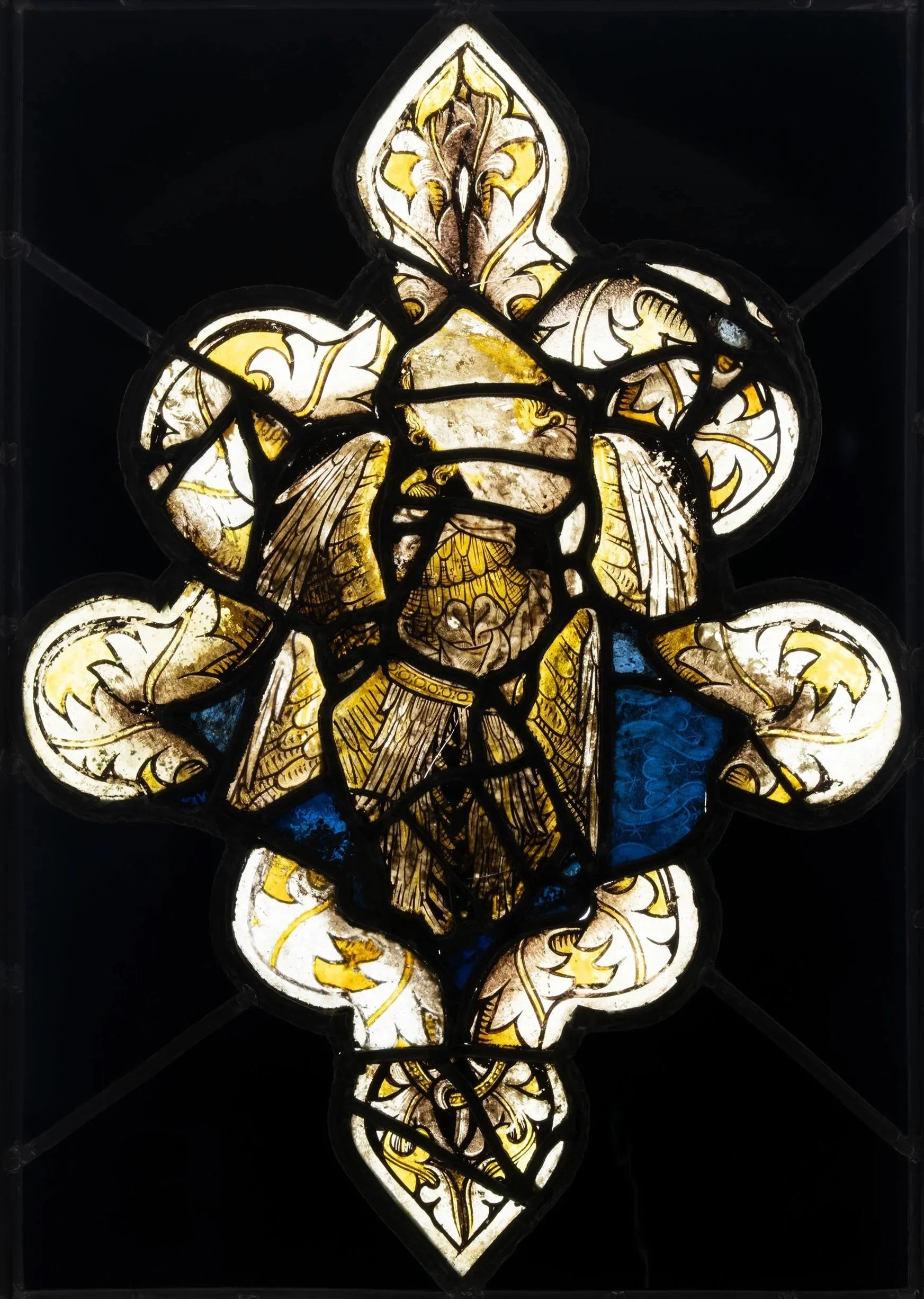
Figure 1: Panel 1 (03.SG.86), octofoil composite panel with remains of seraph and rod-and-leaf border, c. 1470–c. 1480, h 0.75m, w 0.52m.
Panel 1 (03.SG.86) – composite (Figure 1)
The first panel has a rod-and-leaf border originally set in an octofoil tracery light. This is an unusual format; often quatrefoils and occasionally sexfoils were used. It could be from the top of a Perpendicular window; the glass it contains is of that date—or it could be from a Decorated window, but this is less likely. However, only the border is (probably) original to the octofoil glazing. Normally, if the single top tracery light of a Perpendicular window contains a figure, it is an image of a member of the Trinity—God the Father, Jesus, or the Holy Trinity. An angel is an unlikely subject for this position, and a suspicion that it is not original to the panel is confirmed by the awkward way it is fitted into the surrounding rod-and-leaf border. The head is partly truncated, and there is no room for the nimbus, or the feet. The angel is a six-winged seraph and, as will be seen, was almost certainly part of the same series of angels as the two others with that subject. Its head is very worn, but enough remains to show that was in the same style as the heads on the other angels. The piece at the bottom of the panel is an insertion, but is similar in style. There are many repair leads. What was originally set in the existing border is not possible to say.
Panel 2 (03.SG.87) – composite (Figure 2)
The second angel panel is also composite. The central piece with the angel’s girdle and what is part of a spear shaft, and that immediately below on the left, belong together with the three fragments of a blue and green dragon (the green being produced by yellow stain painted on blue glass). They are from a depiction of St. Michael killing the dragon. Either side of the central piece are the hands and wings from another angel who would originally have been a standing feathered figure with hands raised in praise, probably intended to be part of a chorus of angels singing praise to God. The head on the present panel wears a diadem and is in the same style as the other angel’s head. It could belong to the St. Michael figure (the lower part is from elsewhere), and looks too small in scale to match the hands of the other angel. The nearly complete rod-and-leaf border may well have belonged with the St. Michael figure, and not for the other angel, as the latter appears to have been on a slightly larger scale and its wings are truncated by the border on the left. There are several repair leads.
Panel 3 (03.SG.258) – Seraph (Figure 3)
The third angel is now in a roughly oval-shaped panel which bears no relationship to its original form. It includes the most complete of the three figures, again a six-winged seraph, now wearing a turban with six crosses along the top (unusually picked out from a black wash), an ermine tippet and a girdle with an octofoil fastening. The feathered legs look not quite right and may be from another panel. The figure is patched in some places with fragments from similar ones. The blue clouds and stars in the background include one piece on the right which seems to be in its original place, and possibly other pieces may be as well. There are also other patches of blue glass. At the top is a large piece of intruded white cloud against golden rays. There are many repair leads. The panel would originally have had straight sides, probably a curved bottom and single foil at the top.
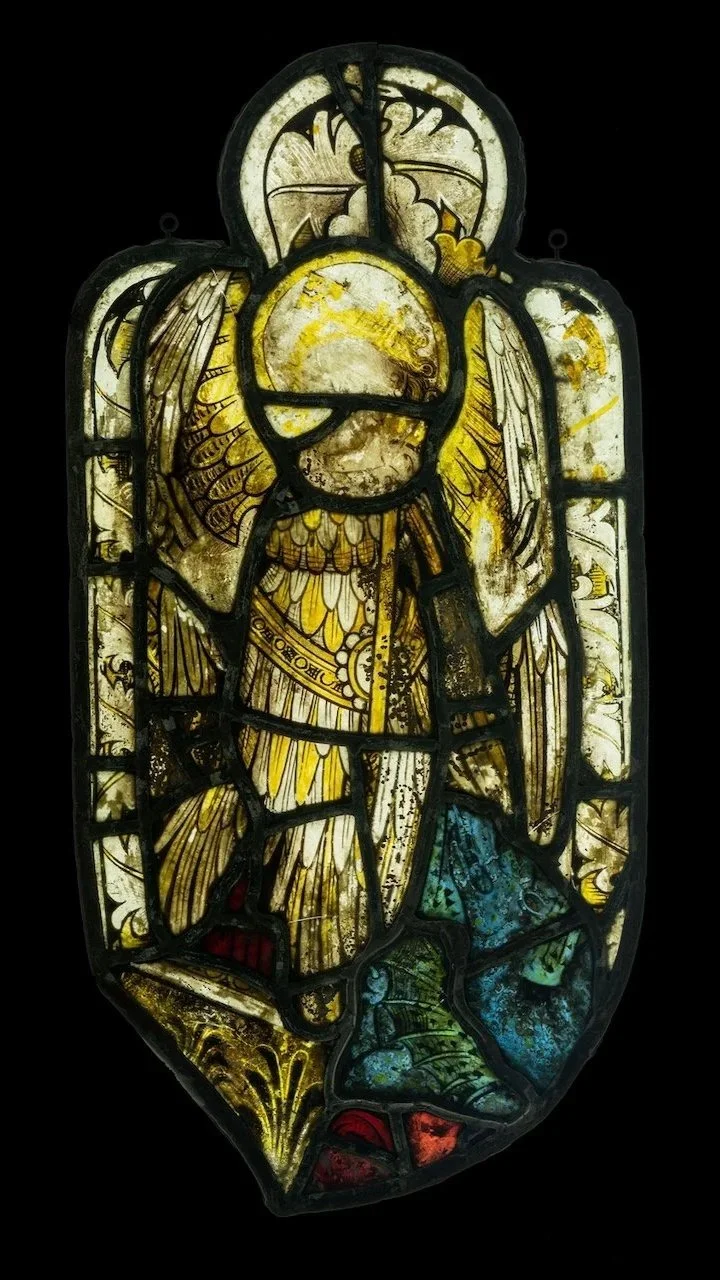
Figure 2: Panel 2 (03.SG.87), composite tracery-light panel with parts of a figure of St Michael, another angel and rod-and-leaf border, c. 1470–c. 1480, h 0.59m, w 0.29m.
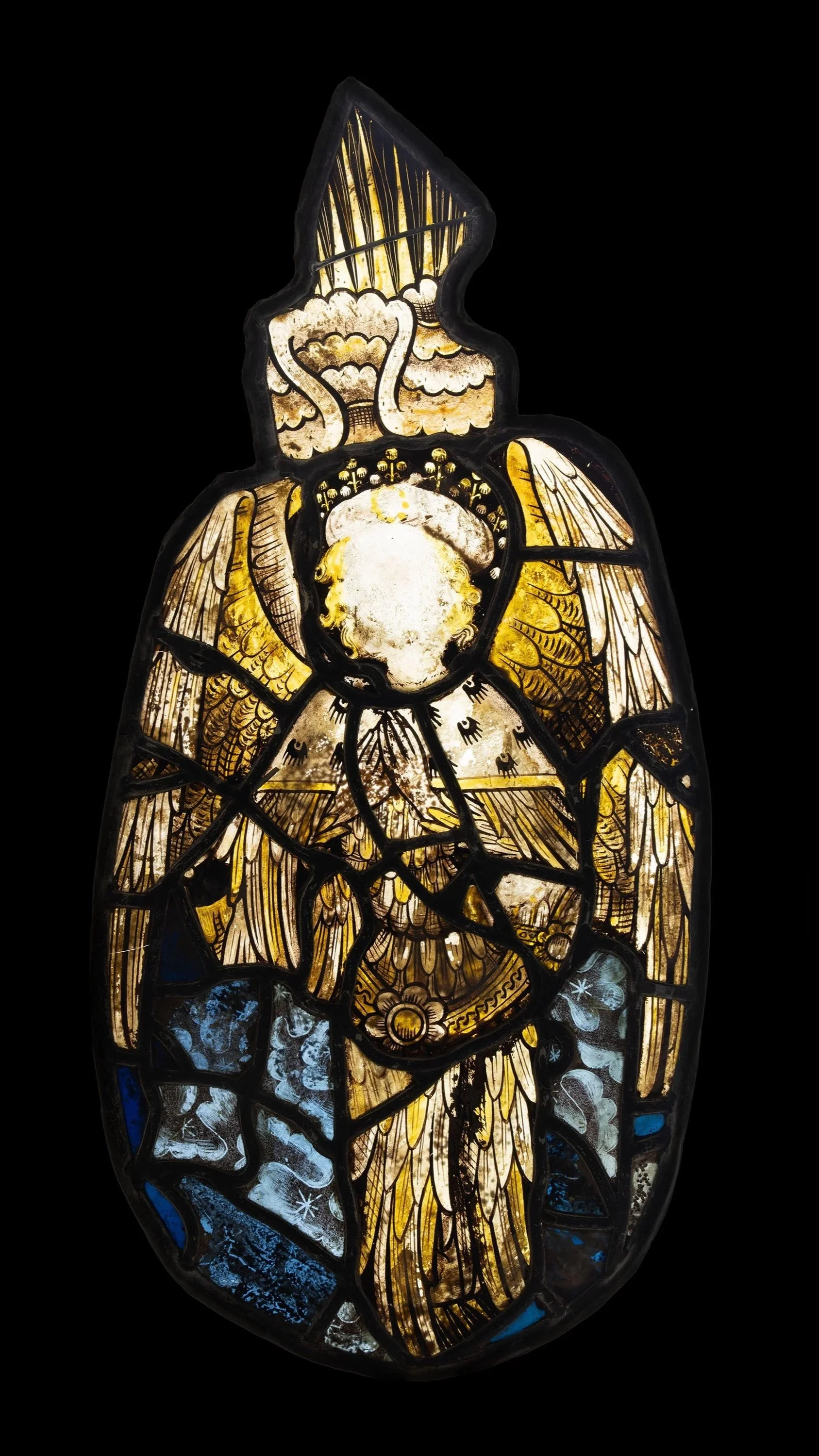
Figure 3: Panel 3 (03.SG.258), oval panel (not original shape) with a figure of a seraph and blue clouds, c. 1470–c. 1480, h 0.695, w 0.33m.
Panel 4 (03.SG.96) – Virgin and Child (Figure 4)
The first of the two panels with human figures depicts the Virgin and Child surrounded by a rod-and-leaf border. It is almost complete, but the paint is badly worn in places. There are a few small replaced pieces, mainly in the border and a larger one at bottom-right in the blue background, which comes from the top-left part of the blue background of a lost companion panel. There are several repair leads.Panel 5 (03.SG.257) – St Catherine? (Figure 5)
The main problem with this panel is the identity of the saint, which will be discussed later. The figure is in poor condition, with heavy paint loss on the head and left hand; the right hand is missing and the bottom of the robe has been replaced by part of a similar garment. One piece is missing from the neck and fragments of the border have been replaced. Most if not all of the red background has been created by red fragments. There are several repair leads. When the iconography of the figure has been discussed, its original appearance will become clearer.10
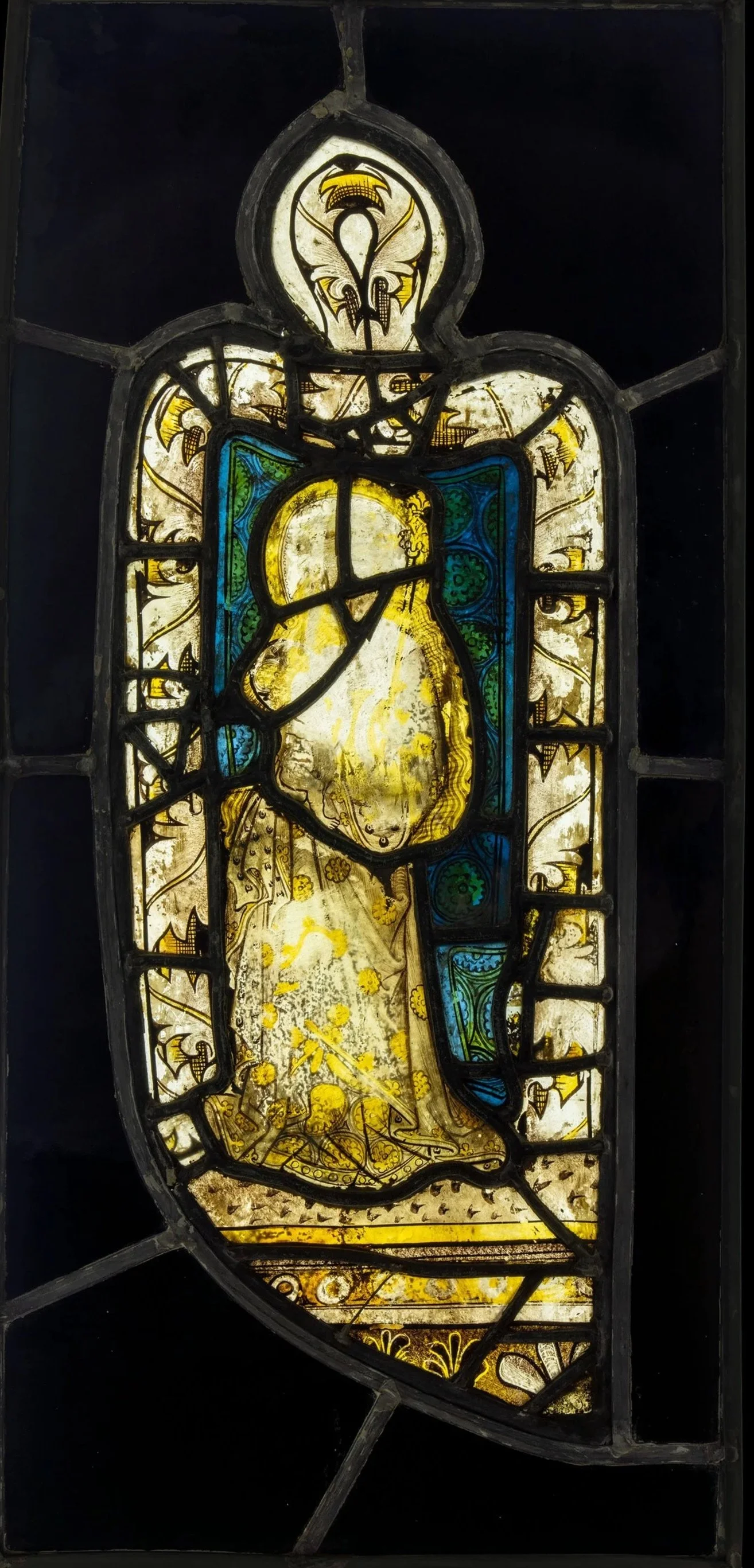
Figure 4: Panel 4 ( 03.SG.96), tracery-light panel with figures of the Virgin Mary and Child, a rod-and-leaf border and blue background, c. 1470–c. 1480, h 0.66m, w 0.255m.
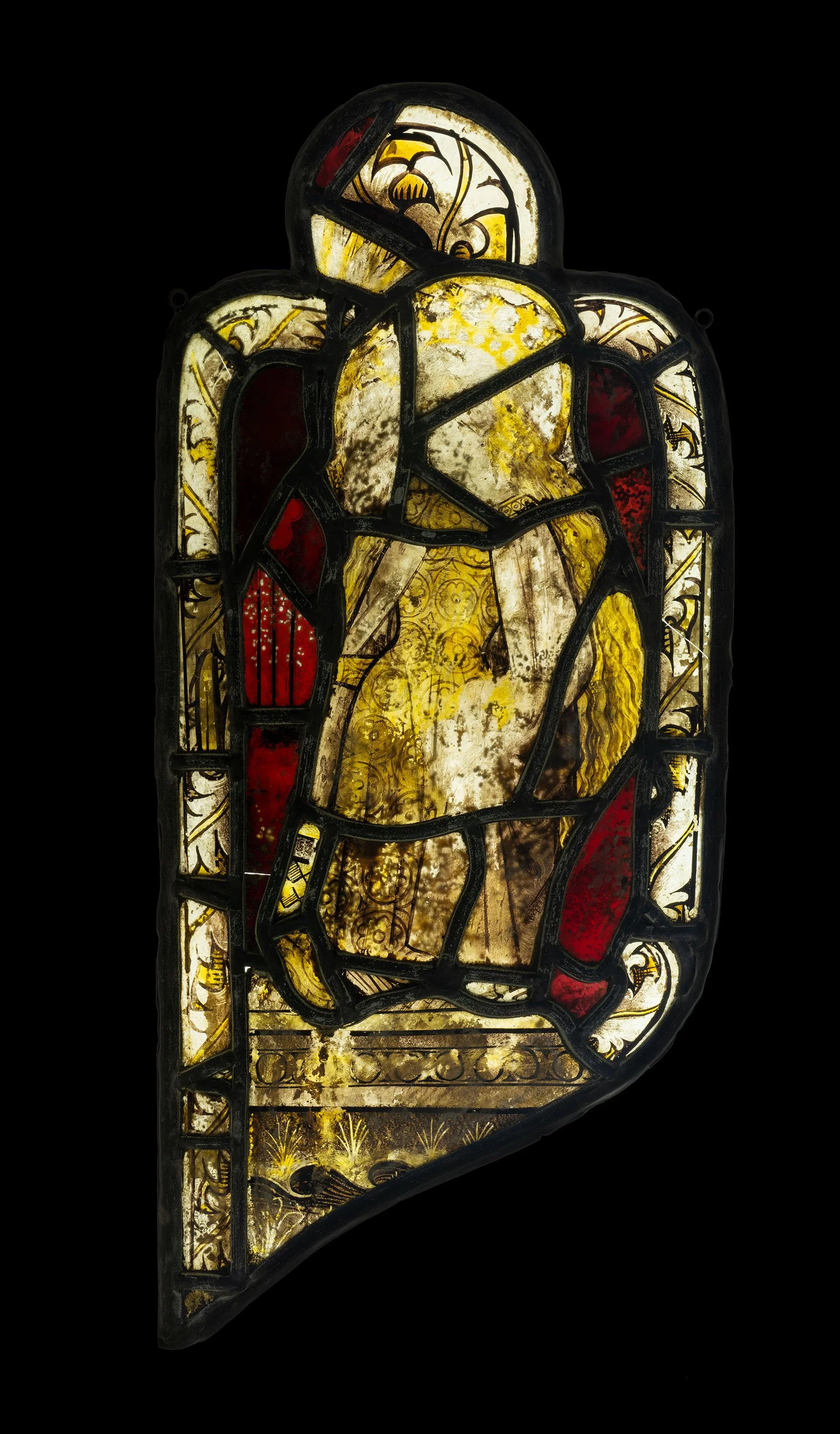
Figure 5: Panel 5 (03.SG.257), a tracery-light figure, with a figure of St Catherine?, a rod-and-leaf border and ruby background, c. 1470–c. 1480, h 0.60m, w 0.275m.
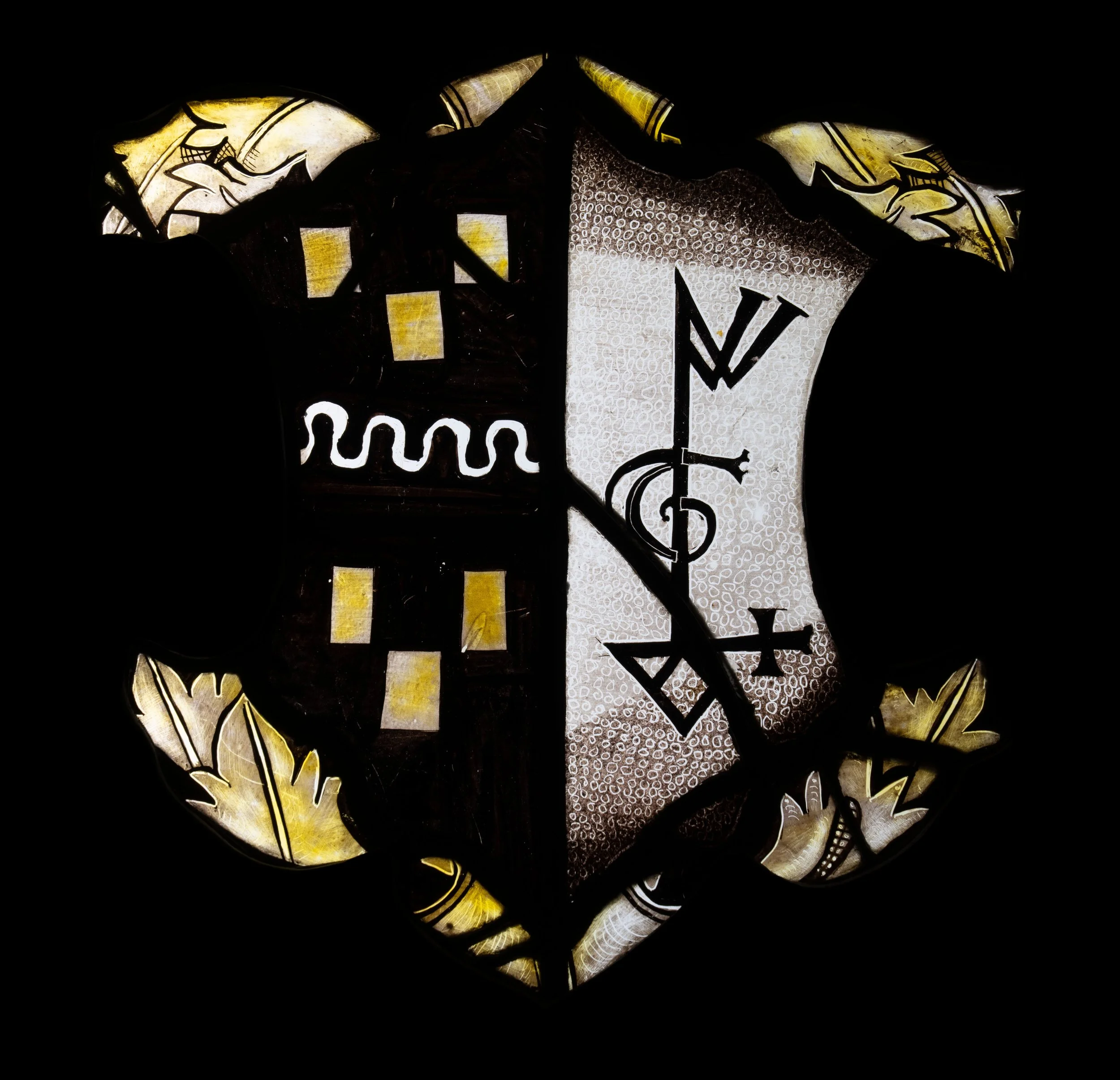
Figure 6: Panel 6 ( 03.SG.106), shield with the arms of Chape impaling his merchant’s mark, c. 1525–c. 1540.
Panel 6 (03.SG.106) – Shield with Arms and Merchant’s Mark (Figure 6)
The turned-down shield (see the iconography) is decorated at the top and bottom with yellow foliage, of which one piece on the bottom right has been replaced. On the foliage and the billets on the shield the silver stain is much worn and there are a few repair leads. Otherwise, the panel is in good condition.
Iconography
Panel 1 (03.SG.86) – composite
The angel has three pairs of wings and is feathered, the standard iconography of a seraph, the seraphim being one of the Nine Orders of Angels.11 They were most closely associated with praising God. The damaged figure here has lost its arms, but what is left suggests that they were raised, as in the fragmentary figure in the next panel. At Great Cressingham in Norfolk is a set of six such angels in the tracery lights of a north aisle window, each holding a word from the text they were singing to praise God (Figure 7).
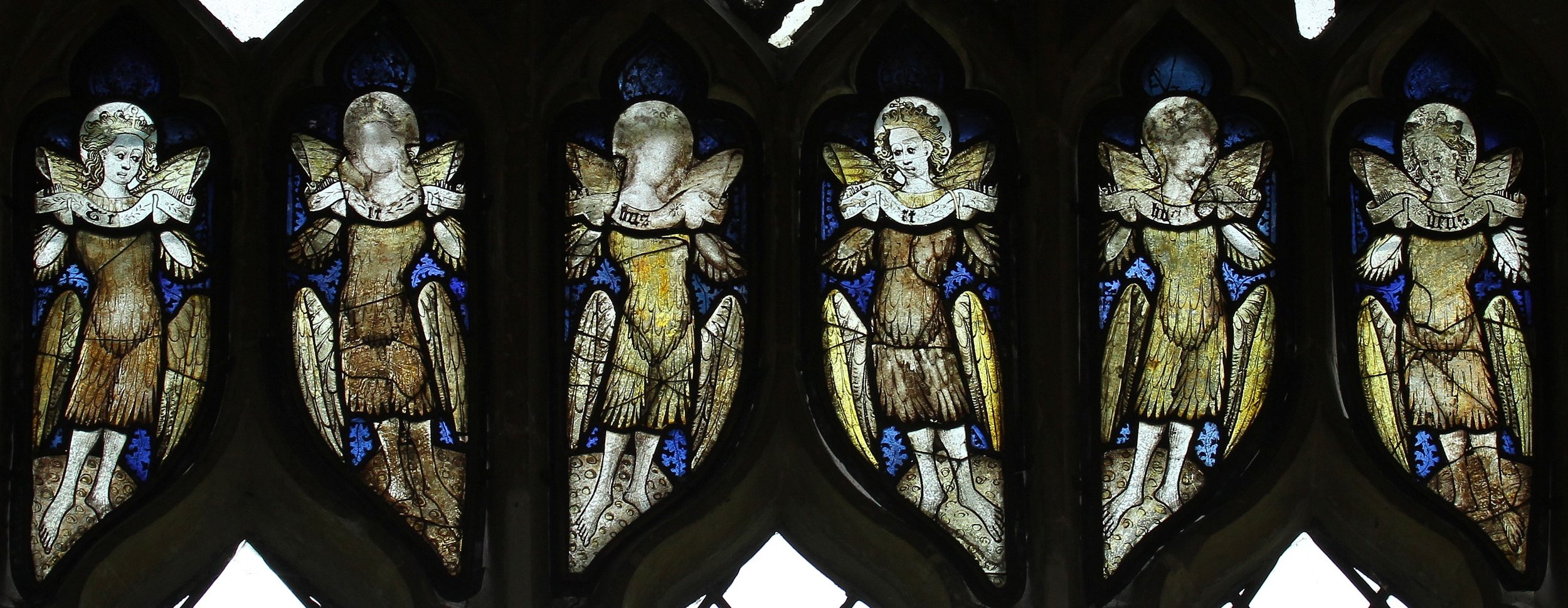
Figure 7: Great Cressingham, Norfolk, north aisle window, Angels holding text praising God, c. 1435–c. 1445, (photo Mike Dixon).
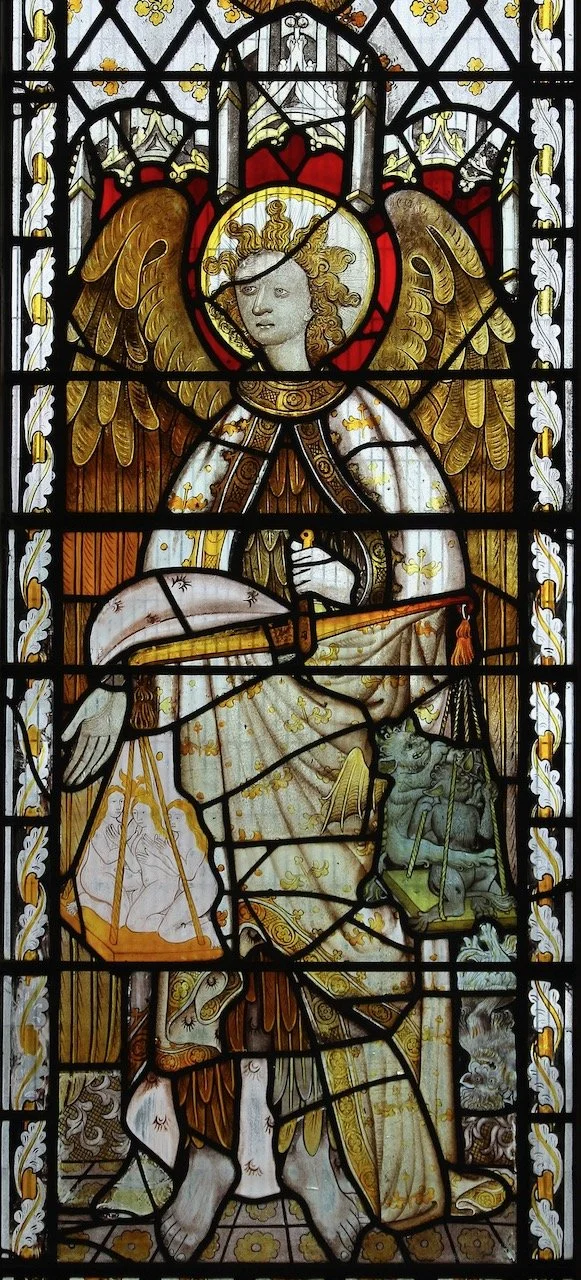
Figure 8: Martham, Norfolk, east window of south aisle, St Michael weighing souls, mid-fifteenth-century, h 1.29m, w 0.505m, (photo Mike Dixon).
Panel 2 (03.SG.87) – composite
As stated above, the central part of this composite panel is from a depiction of St. Michael, with his spear to kill the dragon which survives below. The archangel Michael was closely associated with the Nine Orders of Angels, his feast day being that of St. Michael and All Angels (September 29). He was sometimes included, as probably here, in a series of the Nine Orders as a representative of Archangels. In Norfolk, this was always in a tracery light, except at Martham, where he appears as a main-light figure weighing souls, with the other eight orders originally in the tracery above him (Figure 8). This was a convenient arrangement, as it was not easy to have a series of nine tracery lights to fill, whereas eight were commonly present. For the seraph with raised hands, see the previous panel.
Panel 3 (03.SG.258) - Seraph
This is the third and best-preserved Seraph, here with hands in prayer position, praying to God.12 The most frequent description of this Order in the literary sources is that “Seraphyn ardent amore dei” (Seraphim burn with the love of God). The turban headdress in various forms is frequently seen on figures of angels in Norfolk stained glass, as is the ermine tippet over the shoulders; ermine was reserved on earthly beings for royalty.
Panel 4 (03.SG.96) – Virgin and Child
The Virgin and Child is the most complete of the figured panels, but the loss of paint has removed certain details. The Virgin also holds a scepter and was therefore almost certainly crowned as Queen of Heaven, although the crown has been erased. The Virgin is nimbed and wears an ermine mantle over a dress with rosette pattern. The Infant Jesus is shown naked; he often holds something, often a fruit, but whatever it may have been is now lost. In a depiction now in Norwich Cathedral from Ringland in Norfolk, in which the crowned Virgin also holds a scepter, he holds a bird on a string (Figure 9).
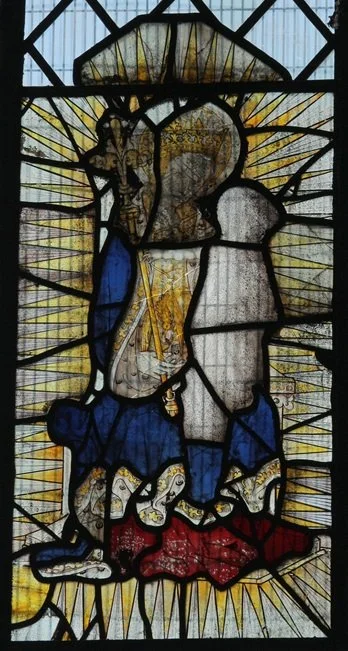
Figure 9: Norwich Cathedral, St Luke’s Chapel south window, Virgin and Child, from Ringland, Norfolk, c. 1460–c. 1470, measurements unavailable, (photo Mike Dixon).
Panel 5 (03.SG.257) – St. Catherine?
This is the most difficult of the panels to elucidate, but a careful look at the condition leads to an almost definite identification of St. Catherine of Alexandria. Bearing in mind what was written above, the following details can be considered. St. Catherine was held to be of noble birth, perhaps a princess, and she is usually depicted wearing a crown. The long hair indicates that she was a virgin saint, and in her legend, her refusal to abandon this state plays a crucial role in her martyrdom and execution. It must be said, however, that in both the panel with the Virgin and Child and this one, the hair is unusually long. Thus far, it has been established that a virgin saint of royal birth is indicated. In Norfolk, two further attributes identify figures of St. Catherine: her spiked wheel, on which she was tortured and a sword with which she was beheaded. Neither are extant on the panel. Her left hand and what she was holding can no longer be seen because of possibly deliberate paint loss. As the lower part of her mantle is lost, she could have held a sword point down. This is probable, when one looks at two comparable figures of the saint, one from Norwich, St. Peter Mancroft (Figure 10)13 and the other, more complete, was once in a private collection but now in the Brooks Art Museum in Memphis, Tennessee (Figure 11).14 However, since no part of the sword is visible, an alternative attribute seen in some depictions in the form of a book could have been possible, although in that case her hand would usually have been rather higher. The book, when depicted, alluded to the fact that she was highly educated. Her right arm is just visible pointing to the left, and, if our identification is correct, her hand would have held the spiked wheel. She wears an elegant, slim-waisted dress, which is in outline like the robe-royal, worn by royalty, on the Memphis figure.
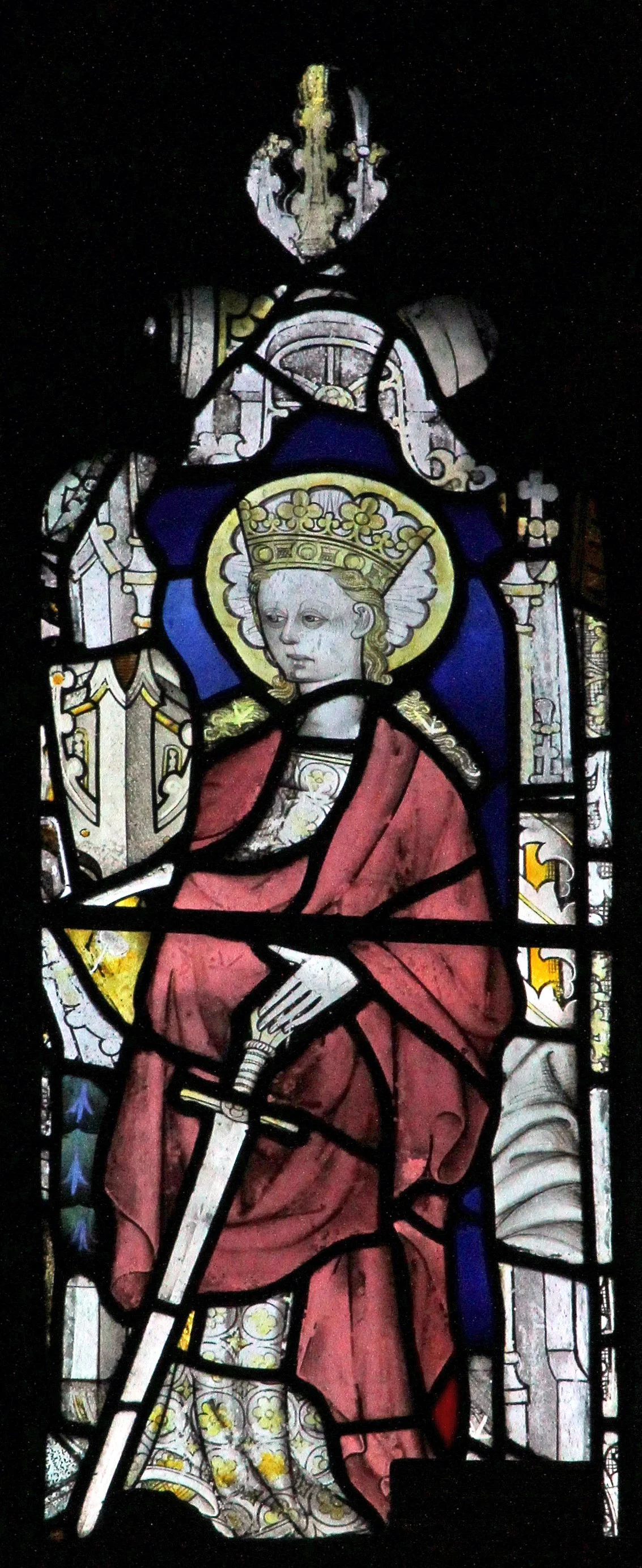
Figure 10: Norwich, St Peter Mancroft, east chancel window, St Catherine, c. 1445–c. 1455, h. 0.75m, w 0.25m, (photo Mike Dixon).
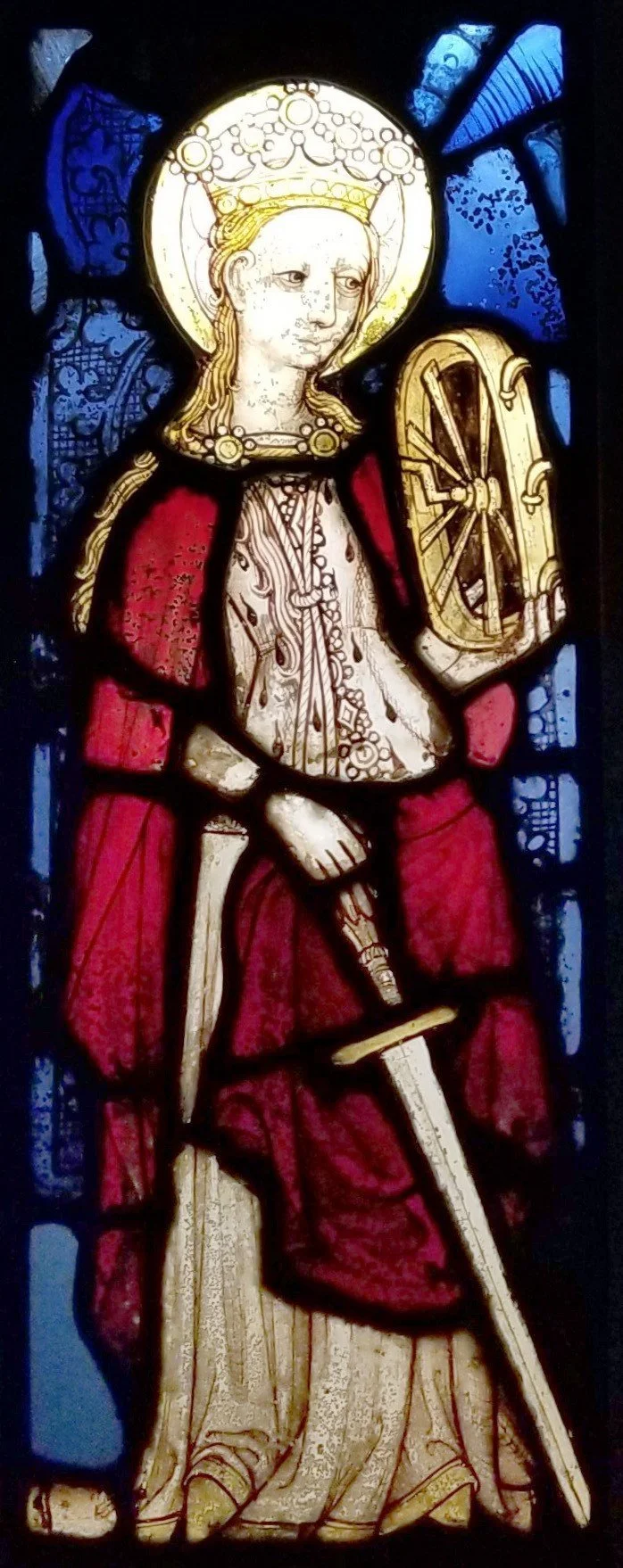
Figure 11: Memphis Brooks Art Museum, Memphis, Tennessee, St Catherine, c. 1445–c. 1455, h 0.40m, w 0.153m, (photo with permission from the Memphis Brooks Museum of Art). Required permission information from Memphis Brooks Museum or Art: “Unknown Artist, Saint Catherine of Alexandria, ca. 1450-1460, pot metal and colorless glass, brown vitreous paint and silver stain, 16 1/4 x 6 1/2 in., Gift of Walter R. Brown and Richard K. Tanner 2023.5.2.”
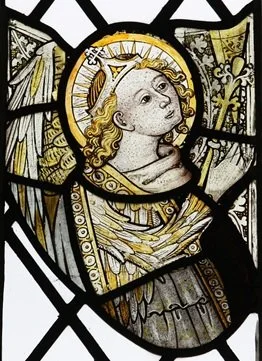
Figure 12: Bawburgh, Norfolk, Gabriel, from Annunciation (part), south nave window, c. 1470–c. 1480, h. 0.325m, w. 0.235m, (photo Mike Dixon).
Workshops
Here, the five fifteenth-century panels will be discussed as a group, and the shield afterwards. Norwich, being one of the largest cities in medieval England and with an extensive and prosperous hinterland, was able for much of the medieval period, and especially in the fifteenth century, to maintain large and long-lasting glass-painting workshops. The best known and most important one was that of John Wighton, who became a freeman of the city in 1411 and died in 1457.15 One characteristic of a large workshop is that it had several glass painters who shared a common repertoire of designs and decorative motifs, such as the rod-and-leaf border seen in some of these panels, but the painters all had to varying degrees their own individual painting styles. John Wighton trained with another glazier before starting his own workshop (or taking over that of another master who retired or died), and some of the characteristics of his glass painters were influenced by earlier ones who worked before his firm was started. After he died, his former apprentice, John Mundeford, continued the workshop until his death in 1481; after this, it was probably taken over by Wighton’s nephew John, who by the time he died in the early sixteenth century was a poor man. All this is to explain that when the five fifteenth-century panels are ascribed here to the Workshop of John Wighton, that could include craftsmen both before and after his death. In fact, these panels are almost certainly from c. 1470–c. 1480. Attribution of glass to his workshop in its widest form rests on the presence of distinguishing decorative motifs, of style comparison with other glass already established as being from his workshop, and of the use of designs and cartoons also seen in other glass by his workshop. The main decorative motif seen here is the rod-and-leaf border. This is by no means confined to the Wighton Workshop, and can be seen in the work of the Goldbeater/Heyward Workshop as well, but in a different, flatter form, and was also used in other media, such as manuscript illumination.16 Thus, for this motif, it needs to be combined with style to be significant. Its use in tracery-light glazing in Norfolk is, however, comparatively unusual, as its presence does reduce the amount of space available for the figural content. It is hard to be sure how far some of the rod-and-leaf borders here belong with the figures they frame, but the Virgin and Child panel seems to be all of a piece. Wherever this motif is used in these panels, it was painted by a member of the Wighton Workshop. All three angels are feathered, as are many of the Norfolk angels. A careful examination of the drawing of the feathers reveals that they are by the same hand, and can be closely compared with other extant panels, which still have other features distinguishing them without any doubt as by the Wighton Workshop, for example the figure of Gabriel at Bawburgh (Figure 12).
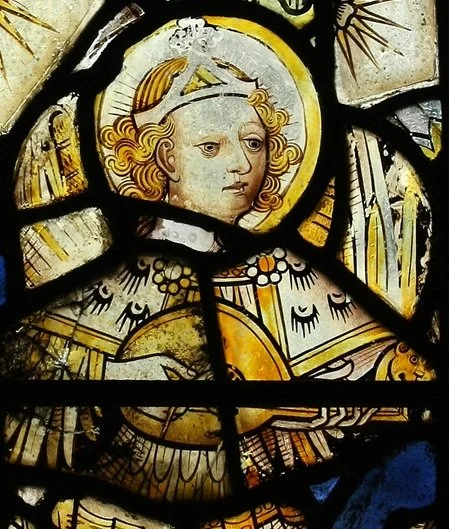
Figure 13: Bale, Norfolk, Musical angel (detail), north nave window, c.1460–c.1470, (photo Mike Dixon).
The panel with the Virgin and Child has an interesting style. It has links to the St. Michael panel (a common pattern of small marks made with a dab of the brush on the blue dragon also appears on the pedestal of the Virgin and Child panel) and to all the panels with the rod-and-leaf border. The common motif of an overall rosette pattern often seen in the work of the Wighton Workshop is seen on the robe of St. Catherine, and in slightly different forms on the Virgin’s robe, but also on the blue background to that panel, a possibly unique position for it in Norfolk glass. The marks on the lining of the Virgin’s mantle indicating the ermine tails are a similar form of those on the angel’s tippet in panel 5 here and elsewhere in Norfolk, for example at Bale (Figure 13) and Bawburgh (Figure 14). The plants with a relieved outline below the Virgin’s pedestal are also seen on the St. Michael panel, although here, they may belong to another panel. The St. Catherine panel has the rod-and leaf pattern and the rosette pattern on the robe in their usual forms, but below the pedestal the relieved plants are found in this way, but the “clifflets,” which appear at Norwich, St. Peter Mancroft and other places, are here painted differently, with curved points, perhaps in line with the curved elegance of the figure and her long hair. Again, this points to another painter from the same workshop.
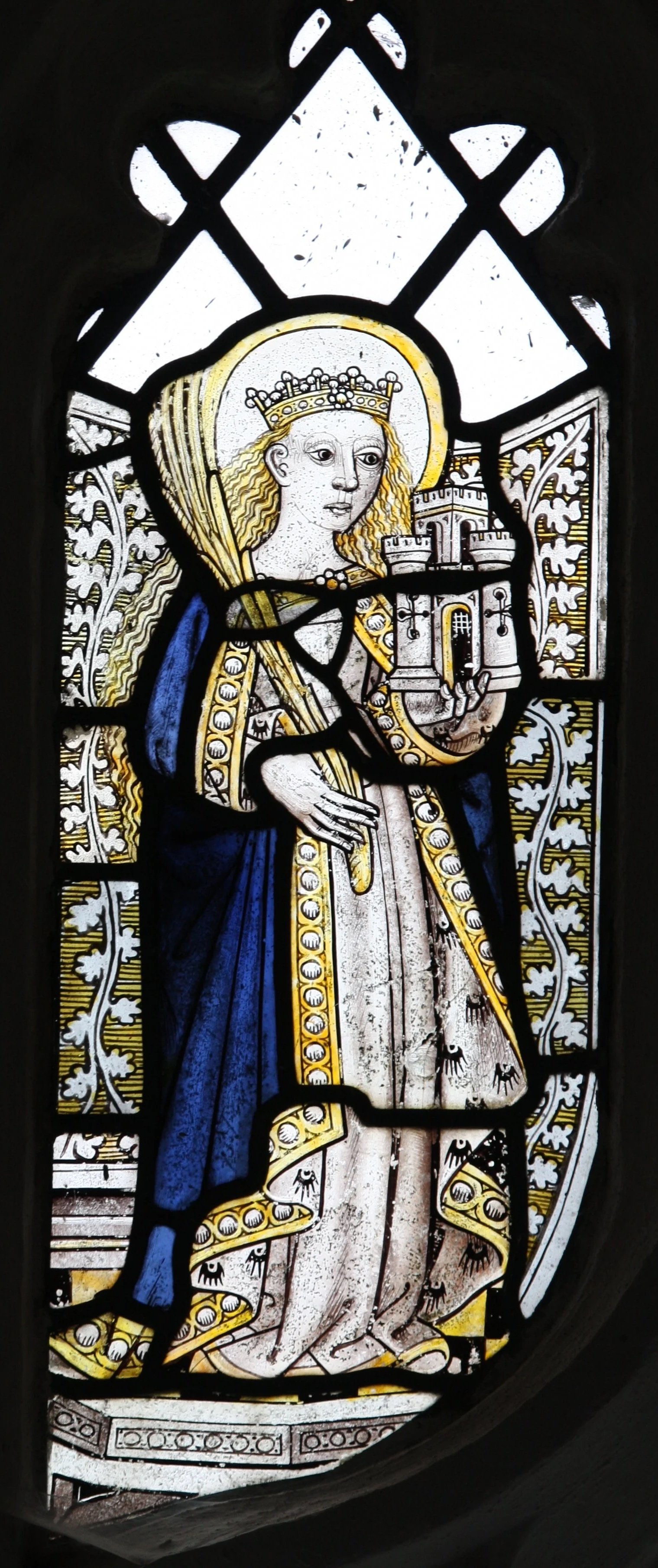
Figure 14: Bawburgh, Norfolk, St Barbara, south nave window, c. 1470–c. 1480, h. 0.54m, w. 0.235m, (photo Mike Dixon).
The slight differences on the panel with the Virgin and Child to these common features, combined with comparisons with both other panels in the series and glass from other locations in Norfolk, all of which are manifestly related to the Wighton Workshop, suggest that the five fifteenth-century panels in question all come from the same Norfolk church and were painted by the same workshop, but by at least two different painters.
Original Location
This is the most difficult question to answer. Some panels from collections in the USA from Norfolk have been attributed to a specific location, and this includes the heraldic panel in Glencairn Museum to be discussed below. The above discussion does point to one conclusion, that all five panels are very probably from the same Norfolk church. This probably does not include a Norwich church, as a tracery-light of the shape and size of that which held panel 1 has not been found there.17 A large amount of medieval glass which was originally in Norfolk churches has been removed to another building, county, or country. The provenance of many of these panels has been discovered, but for many more it remains unknown.
Panel 6 (03.SG.106) – Shield with Arms and Merchant’s Mark
Norfolk has a large amount of heraldic glass, dating from the late thirteenth to the eighteenth century.18 What survives of the medieval armorial glass is, as far as is known, almost entirely ecclesiastical, but from around 1500 and even more from c. 1540 with the growing moves against figural glazing in churches, glaziers turned their attention to the demand for domestic glass, particularly in an urban context. In Norwich details are known of the largely now lost heraldry which formerly adorned the windows of many houses belonging to merchants and other well-off people. The Glencairn shield is from Norwich and is properly blazoned gules a fess nebuly between six billets or, for Chapp, or Chape, impaling the merchant’s mark of the same person. The actual blazon of the shield on the panel is sable a fess nebuly argent between six billets or.
A common feature of stained-glass heraldry is that the tinctures and charges are sometimes altered to avoid a technical difficulty in using the correct ones. In Norfolk this is seen from the late thirteenth century until at least the seventeenth century. In this case, it was caused at least partly by the problem of fitting a ruby background (gules) around six rectangular billets. This would have led to many unwanted lead-lines, or the use of abrasion of the red layer on the ruby glass on all six billets. The application of a thick matt wash to the whole left side of the shield, which was then picked off to reveal the billets and fess nebuly, was a much easier and cheaper alternative. Another change to avoid a difficult piece of glass cutting was the way the fess nebuly was painted. The fess should have been a broad horizontal bar across the full width with both the upper and lower edges having the wavy pattern seen on the shield. The present solution was easily picked out from the paint on the background, whereas cutting a piece of glass with the two wavy edges would have been extremely difficult, and the corresponding parts of the field would have had to have been cut in a similar way to fit the leading round the fess nebuly.
The shield was recorded in two antiquarian sources in what was probably the same location. Anthony Norris (1711–1786) recorded “a fess nebuly between six billets, for Chape, impaling merchant’s mark,” in the window of a house in the parish of St. Andrew.19 Ewing’s “Notices of Norwich Merchants’ Marks” appeared in 1852 and listed and illustrated the merchant’s mark on the shield impaling a fess nebule between six billets for Chape, and placing it in a chamber window of a house in Swan Lane, in that parish.20 Strictly speaking, Ewing’s description puts the shield and mark the wrong way round, but impalements were often expressed rather loosely. The four-volume Dictionary of British Arms confirms the given blazon as belonging to Chapp or Chape, also with a variant of billets argent, from a copy of a mid-fifteenth-century heraldic roll.21 As Swan Lane is in the parish of St. Andrew, it is likely that Norris’ and Ewing’s sources refer to the same building.
As Norwich grew in prosperity, many of the merchants who lived there began to aspire to the status of a gentleman and use various heraldic and sub-heraldic ways of making public their desired role. Gentry and nobility had their own coats of arms, often going back through many generations. The merchants had three ways of copying this. One was to use a merchant’s mark, which was a personal device which those “in the know” could use to identify who was signified. Another way was to use the arms of the company to which they belonged, sometimes impaled with the merchant’s mark; in Norwich, the Grocers’ arms (Figure 15), the Merchant Venturers’ arms (Figure 16) or the Goldsmiths’ arms (Figure 17) often appear. Chape impaled his arms with his merchant’s mark, thus giving both the identity and his status as a merchant, the only known example of this procedure in the city. The third way was to impale the merchant’s mark, or the company arms with their own initials. Finally, a few managed to acquire their own coat of arms. This may have been the case with Chape, but unfortunately there is a dearth of information about him in the city, and it is not known what his trade was, or whether he was approaching gentry status or perhaps was already a gentleman. There were some wealthy merchants and craftsmen living in the parish of St. Andrew in the sixteenth century, and there are several shields with the Grocer’s arms in the church windows. As the previous owner of the property was a grocer, Chape may also have plied this trade.
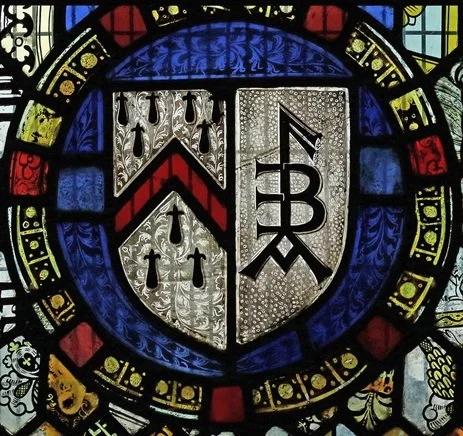
Figure 15: Norwich Guildhall, arms of the Grocers’ Company impaling a merchant’s mark, east window of mayoral council chamber, fifteenth-century or early-sixteenth-century, (photo Mike Dixon).
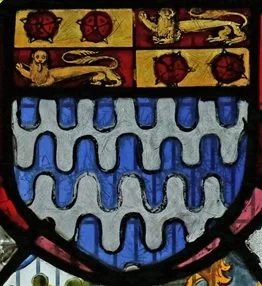
Figure 16: Norwich Guildhall, arms of the Merchant Adventurers, east window of mayoral council chamber, east window of mayoral council chamber, 1534?, h. 0.36m, w. 0.45m, (photo Mike Dixon).
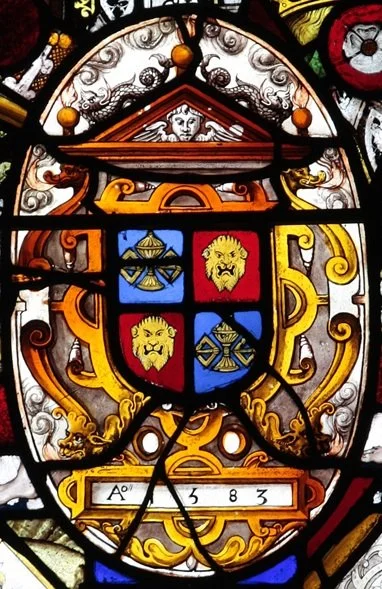
Figure 17: Denton, Norfolk, east chancel window, arms of the Worshipful Company of Goldsmiths’, 1583, (photo Mike Dixon).
The Swan Tavern mentioned by Ewing had been there since at least 1831. When W. Newell scratched his name on the glass in 1797, the house may not have been an inn. Norris adds that on the corner post was the mark of Richard Hughson, who built it.22 He is recorded as being a grocer in Norwich and a creditor in 1510, 1512 and 1524, and twice in 1524 as a debtor.23 At some point in 1520–1530 he was a Guild Surveyor, presumably for the grocers.24
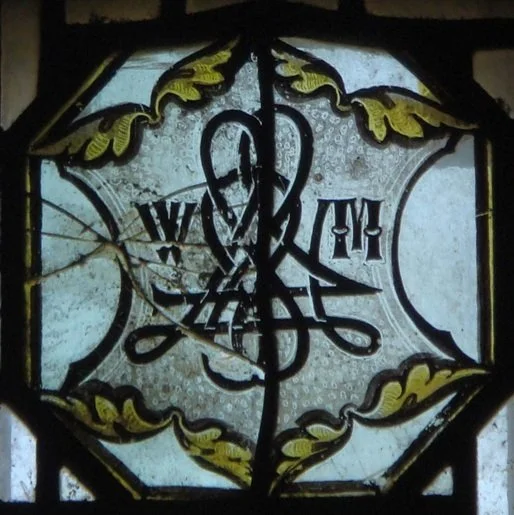
Figure 18: Cambridge, King’s College Chapel, side chapel G, window 29, originally from a Norwich house, merchant’s mark
The top and bottom of the shield are turned inwards to reveal a foliage edge. This feature is seen in Norfolk stained glass from c. 1500–c. 1505 until possibly c. 1570. The earlier examples were made for churches, but there are several extant shields with this feature from c. 1540 made in Norwich for private houses in the city, for example that with the merchant’s mark of William Mingay, mayor of Norwich in 1561. This is now in one of the side chapels in King’s College Chapel in Cambridge (Figure 18). The present example is not one of the more expensive varieties, using full color, with an outer wreath and colored background, but uses just white glass, black paint, and silver stain. The foliage edging is old-fashioned for its date. The painting of the turned-down foliage is different from that of the mid-century examples, in that it resembles that on the rod-and-leaf borders seen in the other panels from the fifteenth century, although it is seen later, for example at Stockton, parish church of St. Michael, Norfolk, in windows from c. 1520 to 1535 (Figure 19). The concave sides of the shield are consistent with a sixteenth-century date. A precise dating is difficult, because of the lack of documentary evidence for Chape, but since Richard Hughson was probably the owner of the property in the first quarter of the century and the style of the shield looks earlier than the mid-century heraldry, a tentative date for this panel would be c. 1525–c. 1540.
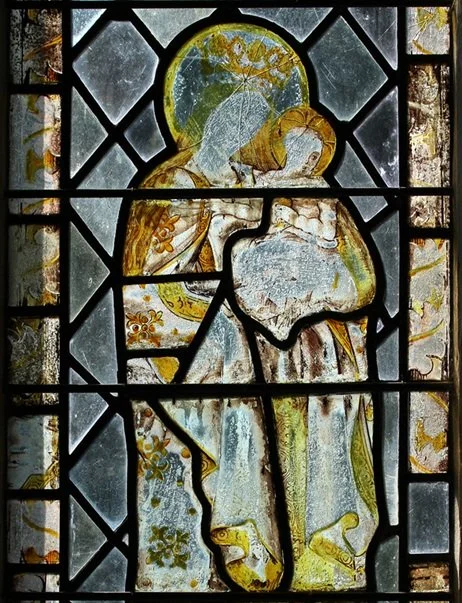
Figure 19: Stockton, Norfolk, south chancel window, Virgin and Child with rod-and-leaf border, c. 1520–c. 1535, h 1.94m, w 0.495, (photo Mike Dixon).
Conclusion
The glass here discussed cannot hope to compete in quality and interest with the magnificent collection of twelfth- and thirteenth-century glass in Glencairn Museum. The situation regarding the survival of stained glass from the mid-thirteenth century to 1700 in Norfolk, is very different. In many ways it is a very rich county for stained glass. There are over 250 buildings containing extant glass of the stated period, and the number of locations where there is extant, recorded, or excavated glass is over 780, plus the dispersed panels now outside the county, such as those considered here. However, because of the Reformation in the sixteenth century, the civil war in the seventeenth, neglect in the eighteenth and the Gothic Revival in the twentieth, the surviving glass is only a fraction of that which once existed and is mostly in an incomplete condition, although the losses are compensated for by the nineteenth-century imports mentioned above and some sites do have impressive remains, such as Norwich, St. Peter Mancroft and East Harling. The study of this fragmented and often dispersed or lost glass is nevertheless fascinating and rewarding. As there are so many survivals, much can be reconstructed and discovered, and even the most fragmentary glass tells a story, when compared with other extant material.
David King
Honorary Research Fellow, School of History
University of East Anglia
Endnotes
1 Madeline Caviness et al., Stained Glass before 1700 in American Collections: Mid-Atlantic and Southeastern Seaboard States, Studies in the History of Art, XXIII, Washington 1987 (Corpus Vitrearum Checklist II), pp. 142–3 (Michael W. Cothren).
2 P. W. J. Bartrip, Legge, “Sir Thomas Morison (1863–1932),” Oxford Dictionary of National Biography, 2010, online.
3 I am very grateful to Michael Cothren, who provided a copy of these notes and helped in many other ways.
4 It has not been possible to trace this man in the city. He was not a freeman of Norwich and was therefore probably not the head of a workshop.
5 Anna Eavis and Michael Peover, “Horace Walpole’s painted glass at Strawberry Hill,” Journal of Stained Glass, xix (no. 3), 1994, pp. 280–314.
6 David J. King, “The Steinfeld Cloister Glazing,” Gesta, xxxvii (no. 2), Essays on Stained Glass in Memory of Jane Hayward (1918–1994), 1998, pp. 201–210 (pp. 202–3 and 209, n. 10). For Hampp, see also U. J. Wandel, “John Christopher Hampp Esquire – von Marbach nach Norwich,” Ludwigsburger Geschichtsblätter, xlix, 1995, pp. 92–104.
7 D. Harford, “On the east window of St. Stephen’s Church, Norwich,” Norfolk Archaeology, xv, 1904, pp. 335–345 (p. 339).
8 Mary B. Shepard, “‘Our fine Gothic magnificence’: the nineteenth-century chapel at Costessey Hall (Norfolk) and its medieval glazing,” Journal of Architectural Historians, liv (no. 2), 1995, pp. 186–207.
9 See the chapter on in Destruction and Loss in Christopher Woodforde, The Norwich School of Glass-Painting in the Fifteenth Century, London/New York/Toronto, 1950, pp. 202–213.
10 I am very grateful to Bret Bostock and Edwin Herder at Glencairn Museum for their help in checking that the color photo taken there was the correct way round. Thanks also to Michael Cothren for arranging this.
11 For the Orders of Angels, see Woodforde 1950, pp. 128–148; Nigel Morgan, “Texts, Contexts and Images of the Orders of Angels in Late Medieval England,” in H. Scholz, I. Rauch, D. Hess eds, Glas. Malerei. Forschung: Internationale Studien zu Ehren von Rüdiger Becksmann, Berlin, 2004,
pp. 211–20.
12 Woodforde 1950, p. 131.
13 A tracery-light panel now in the east chancel window, but from an unknown location in the church. The wheel is missing.
14 The collector was Walter “Bob” Brown, a history professor at the University of Memphis who was also associated with the major local museum: Memphis Brooks Art Museum. Prof. Brown died in 2020 and left his stained glass to the Brooks Museum. It was formally donated in 2023 as a joint gift from Bob and his partner, Richard K. Tanner. The accession no. is 2023.5.2 and the measurements are 15 ¾ × 6 in. (40 × 15.2 cm). Many thanks to Patricia Daigle, chief curator of the Brooks Museum for details and color images of the panel and its partner, depicting St Agnes.
15 For the Wighton Workshop, see D. J. King, The Stained Glass of St Peter Mancroft, Norwich, CVMA (GB), V, Oxford, 2006, pp. cxxiv–clii; ibid., “Glass-Painting in Late-Medieval Norwich: Continuity and Patronage in the John Wighton Workshop,” in P. Binski and E. New, eds, Patrons and Professionals in the Middle Ages. Harlaxton Medieval Studies XXII, Donington, 2012, pp. 347–365.
16 For the Goldbeater/Heyward Workshop, see King 2006, pp. 140–141; ibid., “The Indent of John Aylward – Glass and Brass at East Harling,” Monumental Brass Society, Transactions, xviii/3, 2011, pp. 251–267 (259–267).
17 The glass provided by Stephenson for Costessey Hall included panels from both Norwich and county churches at Acle and New Buckenham. The Corpus Vitrearum Medii Aevi Summary Catalogue for Norfolk, nearing completion, will give details of these identifications.
18 D. J. King, “Some Sixteenth-Century Heraldic Glass-Painting in Norfolk,” Vidimus, no. 124, February 2019, online.
19 Norfolk Record Office, Rye MS 8, p. 43, mentioned by Prince Frederick Duleep Singh in his article “Some Arms in Norwich Houses, recorded by the late Anthony Norris,” in Walter Rye, The Norfolk Antiquarian Miscellany, 2nd series, part 1, Norwich, 1906, pp. 100-113 (p. 101).
20 W. C. Ewing, “Notices of Norwich Merchants’ Marks,” Norfolk Archaeology, iii, 1852, pp. 176–228 (p. 198 and pl. VI, no. 26).
21 T. Woodcock and S. Flower eds, Dictionary of British Arms, iii, London, 2009, p. 365.
22 The Norris reference is in the Norfolk Record Office, Rye MS 8, p. 43 and is taken from F. Duleep Singh, “Some Arms in Norwich Houses, recorded by the late Anthony Norris,” in W. Rye ed., The Norfolk Antiquarian Miscellany, 2nd series, part 1, Norwich, 1906, pp. 100-113 (p. 101).
23 The National Archives, Kew, Court of Common Pleas, Plea Rolls, CP40, nos 990, 998, 1042.
24 Norfolk Record Office, NCR 8f/4.