
Glencairn Museum News | Number 2, 2026
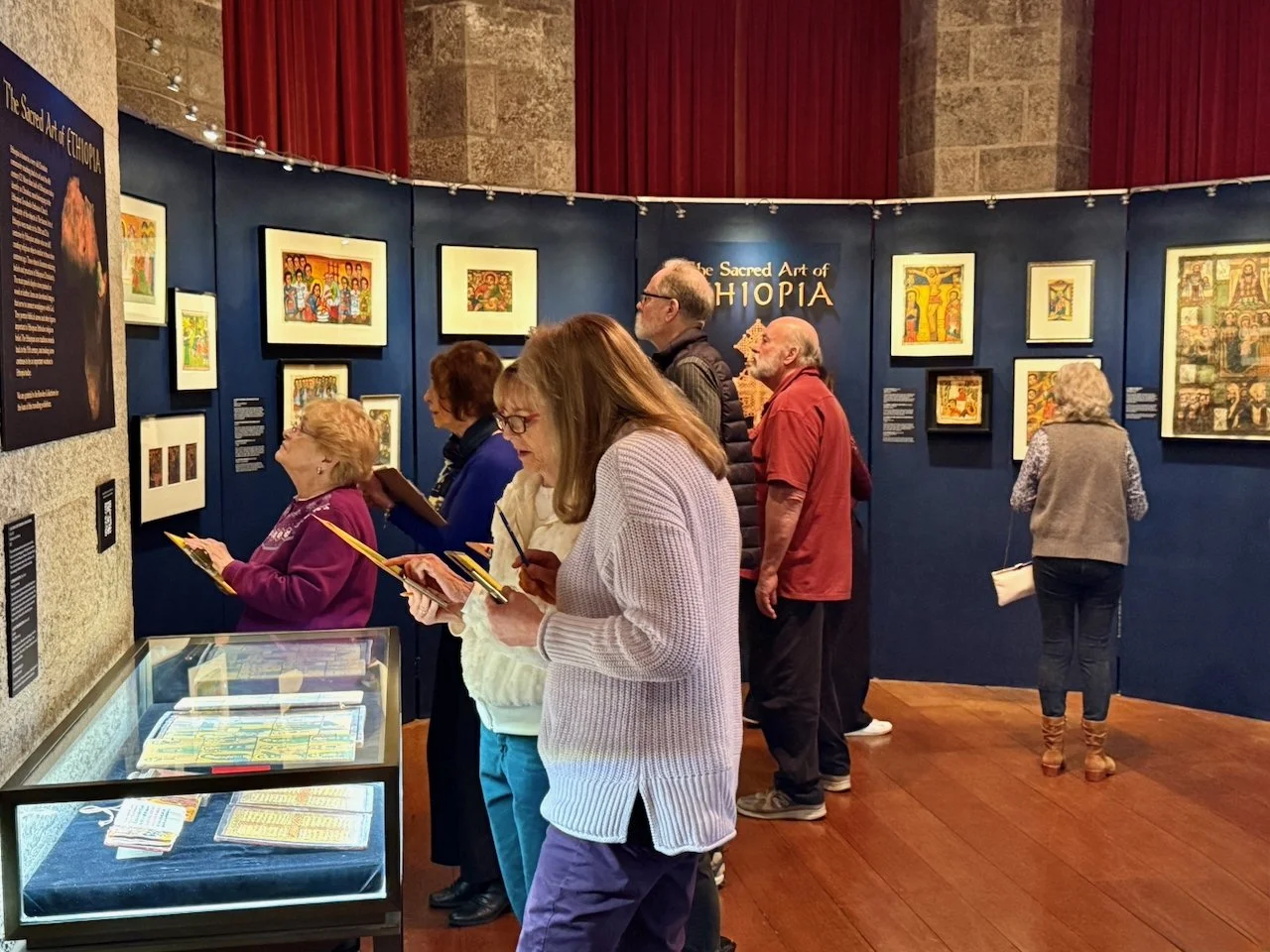
With guided worksheets in hand, guests at the opening of The Sacred Art of Ethiopia exhibition on March 7, 2026 compare Ethiopian sacred art with works from other cultures in the Glencairn Museum collection.
The Sacred Art of Ethiopia, a traveling exhibition now on view at Glencairn Museum, brings together dozens of works of art created by Ethiopian artists. Though most are recent in date, the works show continuity with the past in both belief and practice, offering visitors a glimpse into a vibrant living tradition.
The exhibition is drawn from the Bowden Collections, a series assembled by artist and collector Sandra Bowden. It includes paintings on leather and parchment inspired by biblical themes and Ethiopian manuscript illumination, as well as hammered metal processional and pectoral crosses.
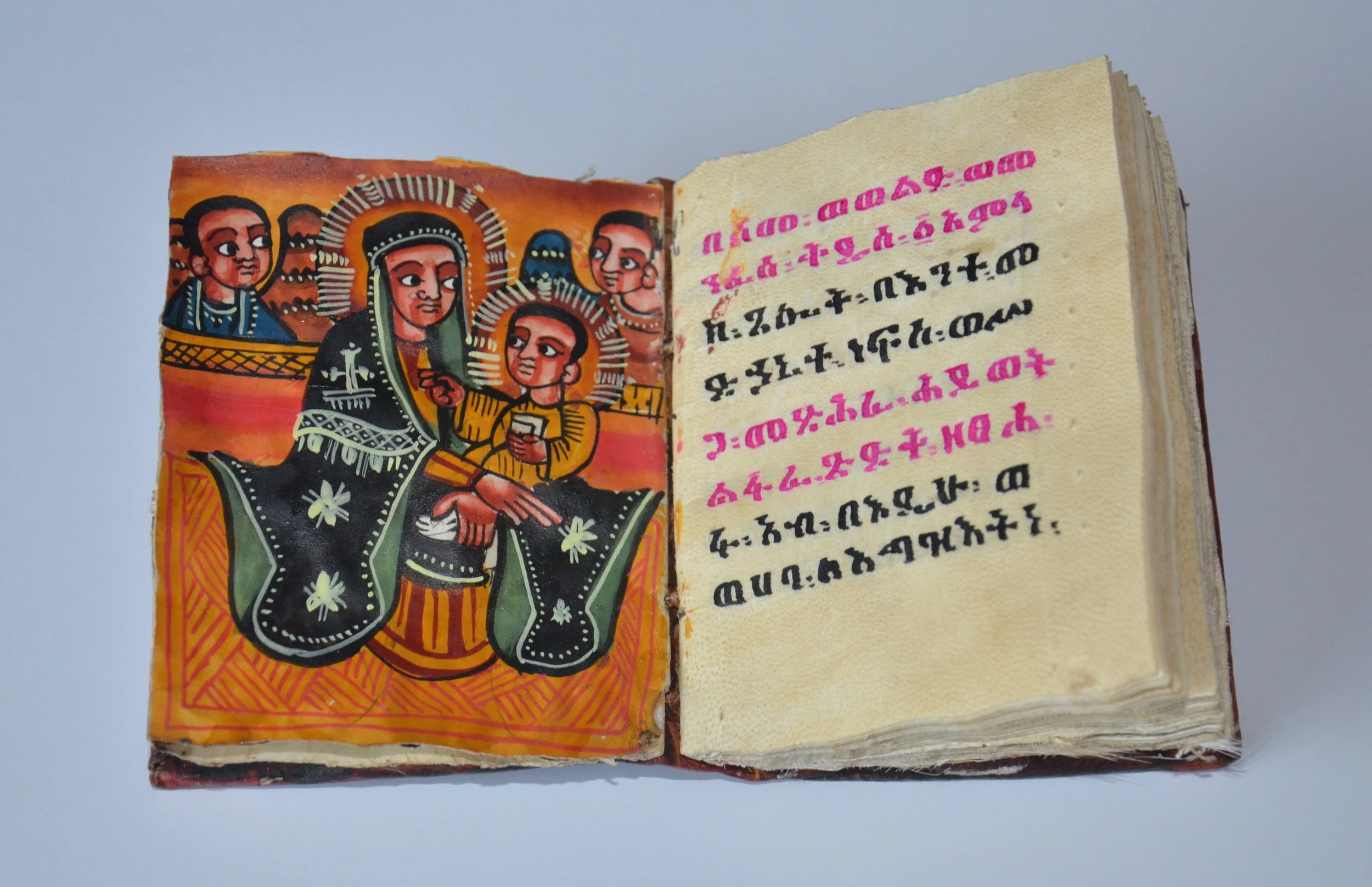
Figure 1: An Ethiopian prayer book with painted illumination and Ge’ez script reflects the enduring tradition of devotional manuscript production.
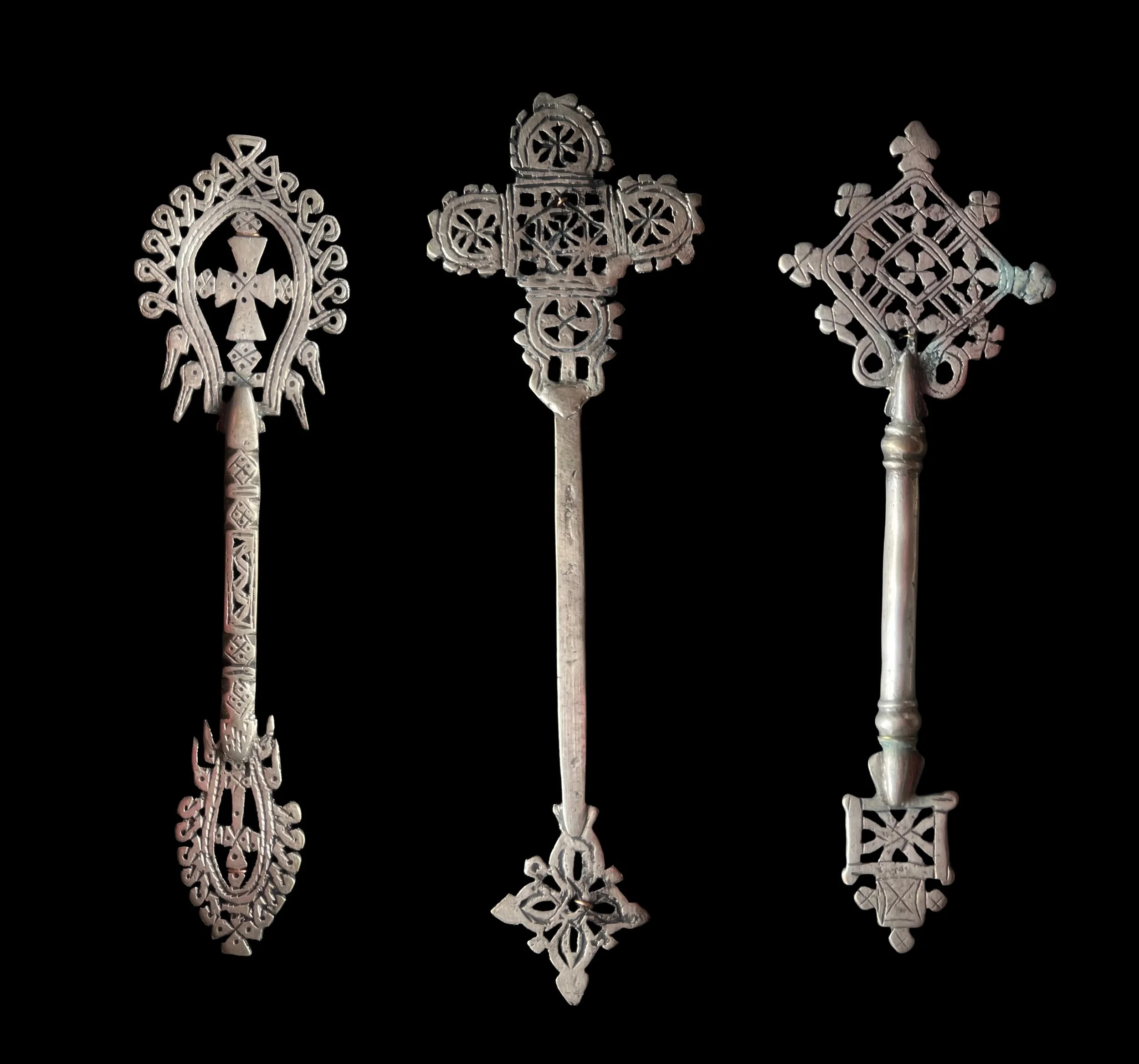
Figure 2: Metal hand crosses from Ethiopia reflect a long tradition of intricate design used in worship and religious processions.
The focus of the exhibition is several dozen icons painted on wood or leather. As devotional images, they serve to connect worshippers with God, portraying biblical scenes and figures central to Ethiopian Orthodox belief. The Ethiopian icon tradition extends back to the 15th century, and the making of icons continues to be an important vocation in Ethiopia today.
The exhibition opened on the morning of Saturday, March 7, with a special gathering for Glencairn Museum members. In the Upper Hall, adjacent to the exhibition, guests were welcomed with refreshments and an introduction to the exhibition’s themes by Director Brian Henderson. Each participant was given a worksheet, inviting them to look closely, reflect, and record their observations. Guests moved between the temporary exhibition and the Museum’s permanent galleries, comparing Ethiopian interpretations of biblical stories with those from other cultures in the Museum’s collection.
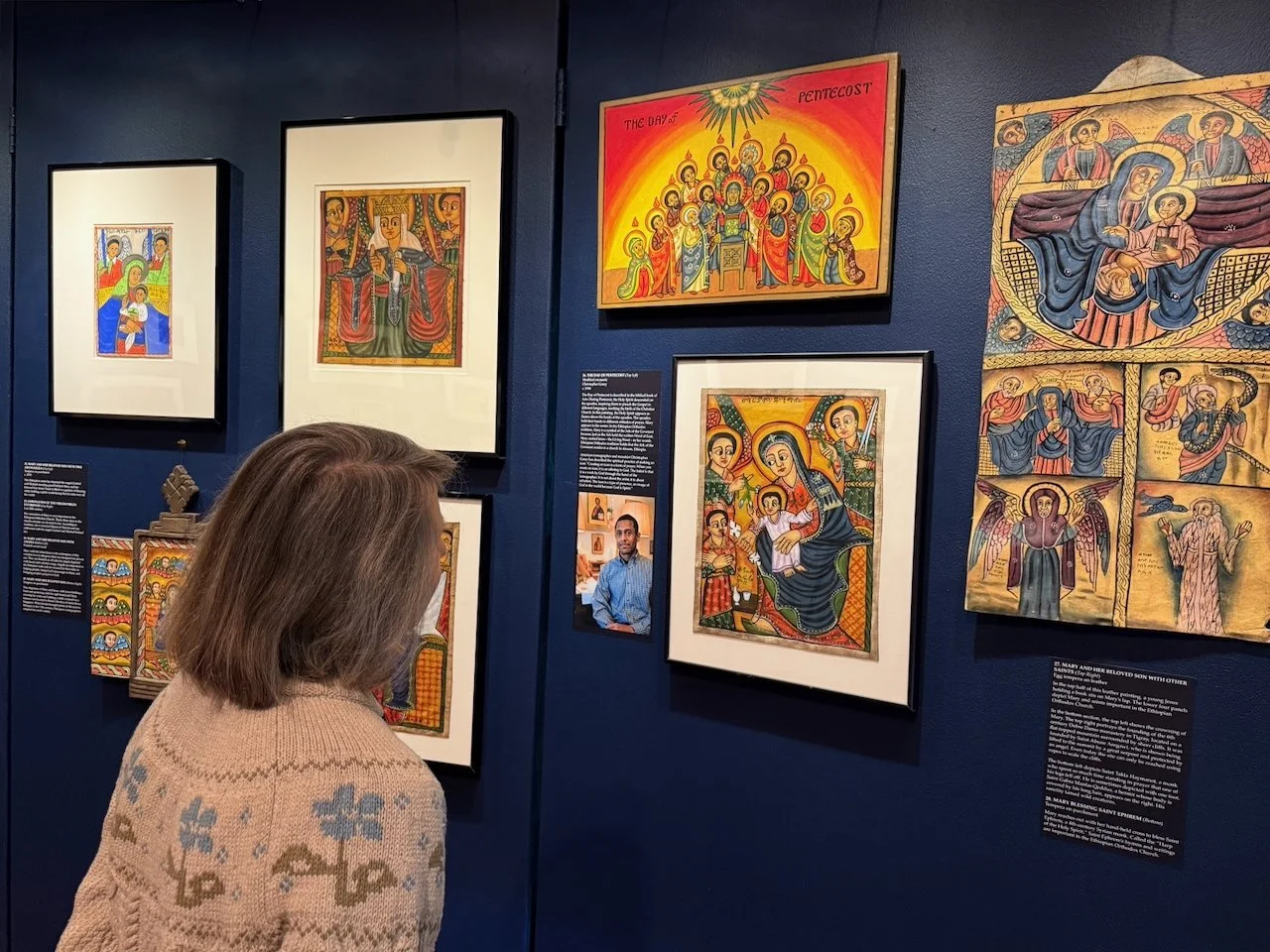
Figure 3: Reading a label for Christopher Gosey’s The Day of Pentecost icon, Glencairn Museum’s Upper Hall.
Visitors noted differences in color, form, and expression, while also recognizing shared themes of religious belief and practice that transcend geography and time. The morning concluded with a group discussion led by Henderson.
The works in The Sacred Art of Ethiopia are part of an ongoing artistic and devotional practice, sustained by artists who continue to engage deeply with this tradition. One such artist is Christopher Gosey, whose icon The Day of Pentecost is included in the exhibition.
In the following interview with Glencairn Museum News, Gosey reflects on his work as an iconographer and on the role of sacred images within a life of faith.
You created The Day of Pentecost icon in The Sacred Art of Ethiopia exhibition at Glencairn Museum. Can you introduce us to the piece? What should we notice about its iconography?
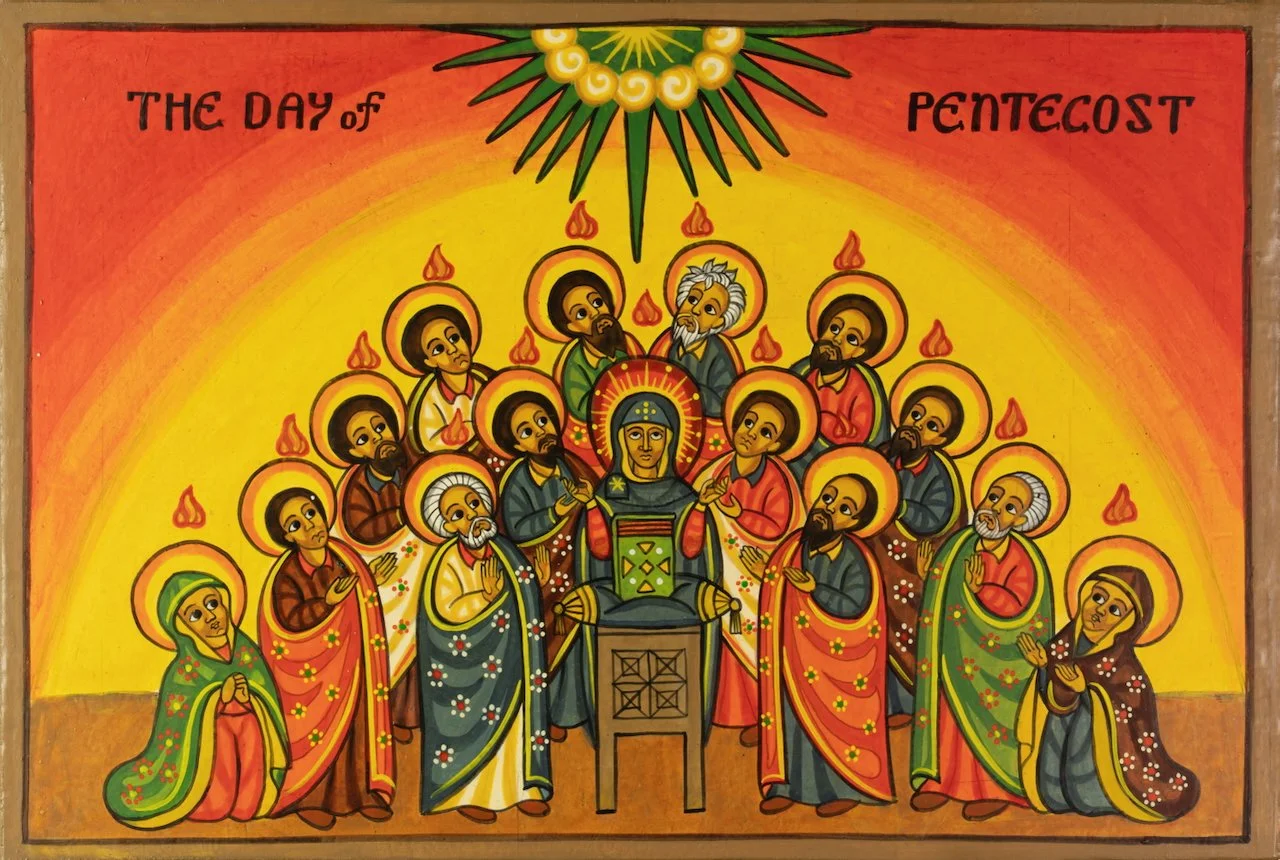
Figure 4: The Day of Pentecost, by Christopher Gosey, depicts the descent of the Holy Spirit in a contemporary interpretation of the Ethiopian Gondarine style.
First, let me define what an icon is. The term icon is derived from the Greek word eikon or the Coptic word eikonigow, which literally means “image.”
In Genesis 1:26–27 we find the earliest use of the Greek term eikon. Here God says, “Let us make man in our image, after our likeness . . . so God created man in his own image, in the image of God he created him, male and female created he them.” In this account we see man and woman living in a state of perfect communion with God. Because of Adam and Eve’s disobedience, this perfect communion was lost. Through the incarnation of the invisible God in the human body of Jesus Christ, this communion has been restored.
As Colossians 1:15 tells us, “He [meaning Christ] is the image [eikon] of the invisible God.”
We also see in 1 Corinthians 15:44, 47, 49 that “there is a natural body and there is a spiritual body… the first man [Adam] is of the earth, earthy; the second man is the Lord from heaven . . . as we have borne the image of the earthy, we shall also bear the image of the heavenly.”
So the icon seeks to depict men and women who have been renewed in Christ—individuals who have cast off the ancient curse that fell on Adam and Eve and who now enjoy glorious liberty as children of God (Romans 8:14, 19–21).
The icon in this exhibition is entitled The Day of Pentecost and is inspired by the scriptural account found in Acts 1:12–2:4.
The Eastern Church Father, St. Basil the Great, when speaking about icons, says:
“What the word transmits through the ear, the painting shows through the image, and by these two means, we receive knowledge of one and the same thing.”
Because of its correspondence to the Scriptures, it is frequently said that icons are “written” instead of painted. While icons transmit the truth of Holy Scripture, they also transmit theological truths rooted in Scripture and apostolic church tradition. For instance, in this icon of Pentecost, the eleven apostles mentioned are shown, but Paul, who was not there, has an honorary spot because of his Spirit-filled missionary work among the Gentiles.
In this same icon, you see only three women. The woman in the center is St. Mary, the Mother of the Lord. She is an example of what a Christian should be, someone who works with God, not against Him. When the Archangel Gabriel announced to the Virgin God’s intention that she bear the Savior of the world, she responded: “Let it be done unto me as you have said.” For Ethiopian Christians, St. Mary (Kaddiste Maryam) is the “True Ark” that contained “Christ, the Word made flesh” and the fulfillment of “The Law.” This icon includes the Book of the Four Holy Gospels Enthroned on the Manbara Tabot (or Altar Chest), which is found in the Holy of Holies of every Ethiopian Church. This Altar Chest contains either a consecrated slab of marble or wood on which is engraved the Ten Commandments on one side, and on the other side is carved an ornate Ethiopian Cross, along with the names of St. Mary and St. John the beloved disciple. The consecrated slab is called the Tabot or Ark, and it represents the original Ark of the Covenant (Tabota Mousa or Ark of Moses) that rests in the Mother Church of Ethiopia in the city of Aksum. The image of the Book of the Gospels resting on a cushion atop an Altar Chest is meant to represent the invisible presence of Jesus Christ among those gathered on the Day of Pentecost.
This icon of Holy Pentecost is painted in a contemporary version of the second Gondarine style, which emanated from the imperial capital city of Gondar in the 1730s, under the royal patronage of Empress Mentewwab. This style is characterized by heavy use of shading to create strongly modeled, “sculptural” faces, and brightly colored backgrounds with shaded bands. The iconographers during this period eagerly included detailed representations of clothing, furniture, the utensils of daily life, and occasionally drew inspiration from European engravings. This school of iconography is characterized by its prolific use of yellow, red, and green.
In Ethiopian theological thought, the colors yellow, red, and green represent three distinct beliefs.
1) This triad of colors represents the three predominant colors of the rainbow. As Genesis 9:13–17 tells us, the rainbow is a sign of God’s covenant with Noah, promising never again to destroy all flesh with a flood.
2) The bloodlines of Noah’s three sons: Ham, Shem, and Japheth, which came together in the person of Jesus Christ. Hence, making Jesus Christ the great unifier of humanity, the offspring of Ham, Shem, and Japheth.
3) Most importantly, this triad of colors represents the triune nature of God as Father, Son, and Holy Spirit. Yellow represents the Father, as the Light. Red represents the Son of God, who took on flesh and blood through the Virgin Mary. Willingly, He spilled His blood to redeem humanity from the curse of sin and death. Green represents the Holy Spirit, which renews and seals those who have been baptized into Christ, uniting them with Him.
In this icon, The Day of Pentecost, we encounter the birthday of the Church of Christ in a very moving and energetic way! At the very top of the icon, above the swirling clouds, is a burst of yellow light emanating from God the Father, filling the upper room with light. Below the band of swirling clouds are green rays, each indicating the paths of the mighty rushing winds that cast forth the Holy Spirit as fiery flames. Above these flames, a protective veil of brilliant red, not unlike the precious blood of Jesus Christ, covers this gathering of believers. Each of them is in a state of intense prayer and adoration. This is an image or icon of the Church of Christ at prayer.
What do you hope happens inwardly for someone who spends time in the presence of one of your icons?
For those who are Eastern or Oriental Orthodox Christians, icons are not merely images or paintings but are a focus of prayer, and a point of contact with the presence of Jesus Christ, who is the true icon of God. St. John Chrysostom advises the faithful to shut their eyes when they stand before an icon in prayer. He says to “shut your eyes,” because it is not by examining an icon or using it as a visual aid that we are helped by it to pray. It is believed that by the power of God’s grace, an icon participates in something that can best be defined in the words of St. Gregory Palamas as the energies of Christ, as the active power of Christ working for our salvation.
For most people who attend this exhibition, their eyes won’t be closed! So having some knowledge of Holy Scripture, an understanding of centuries-old doctrinal and symbolic traditions of iconography will probably affect their response to my work, but such knowledge is not essential. I really believe that without knowing a thing about one of my icons, if a person can be in its presence quietly, even in a museum setting, I believe that it is possible to experience a sense of heavenly peace and calm.
It is my hope that just by looking at the figures in the icon—the eyes, the graceful motion in the way the hands are drawn, the graceful motion in the way the heads bow, the grace and harmony in the linework—the viewer walks away changed. Changed in such a way that he or she desires and seeks more of the peace that only Jesus Christ can give.
Is the act of painting itself a form of prayer for you?
Yes, it is indeed a form of prayer for me! The following words of Metropolitan Anthony of Sourozh (England) is a perfect summation of the sacred process of creating an icon:
“An icon is painted as an act of worship. The wood is chosen and blessed, the paint is blessed, the man who wishes to paint prepares himself by fasting, by confession, by communion. He keeps ascetical rules while working, and when his work is completed, it is blessed with holy water and chrismated* (this last part of the blessing is now often omitted, unfortunately). Thus, by the power of the Holy Spirit, the icon becomes more than a painting. It is loaded with presence, imbued with the grace of the Spirit and linked with the particular saint it represents in and through the mystery of the communion of saints and the cosmic unity of all things.”
* Chrismated: An anointing with holy chrism (a consecrated mixture of forty fragrant oils).
Creating an icon is an offering to God, therefore it is important that I seek forgiveness from those that I have offended or hurt, and it is equally important that I forgive others sincerely and lovingly. Matthew 5:23–24 is very clear that a right relationship with others is essential, if we want God to accept our offering.
After being reconciled with those that I have injured, I must seek reconciliation with God through the sacrament of confession. In the ancient apostolic church, it was customary to confess your sins openly before the whole body of believers. Over time that tradition gave way to the present tradition of having the priest of the local congregation “stand in” as a “witness” to your confession to God instead of the entire church membership.
Once I have been reconciled with God, and the body of Christ (my brothers and sisters in Christ), I am free to begin the work of creating holy images. Prayers similar to this are said by a priest over me and my art materials:
“In the name of the Father, Son and the Holy Spirit Amen . . . O Lord our God, who created us after your own image and likeness; who redeems us from our former corruption of the ancient curse, through Christ who befriended all mankind, who took upon himself the form of a servant and became man; who having taken upon himself our likeness remade your saints of the ‘first dispensation’ (the first covenant or mosaic dispensation), and through whom also we are refashioned in the image of your pure blessedness; your saints we venerate as being in your image and likeness, and we adore and glorify you as our creator. Therefore we pray you, send forth your blessing upon us and these raw materials of wood and paint, when completed bless and make holy these icons unto your glory, in honour and remembrance of your saint(s) . . . ; and grant that this sanctification will be to all who venerate these icons . . . , and send up their prayer unto you, standing before them; through the grace, bounty and love of your only-begotten Son, with whom you are blessed together with your all-holy, good and life-creating Spirit; both now and ever, and unto ages of ages.”
From this point until the end of the icon painting process, various prayers are offered daily. But one prayer is offered consistently with each brushstroke. It is called the Jesus Prayer. This prayer is inspired by the Apostle Paul who admonished the Church at Thessalonica to “pray without ceasing” (1 Thessalonians 5:17). In English, the most common form of the prayer goes like this: “Lord Jesus Christ, have mercy on me a sinner.” I personally prefer the Ethiopian form, which goes like this: “Egzio Meherane Yesus Khristos.” My desire when using this prayer is to unite my will with His will, and through humility, to become less, while He becomes more, working within me, and through me. This is why traditionally icons are not signed. If a patron insists that an icon be signed, the Church allows it to be signed like so: “through the hand of” followed by the iconographer’s name.
What drew you to become an iconographer?
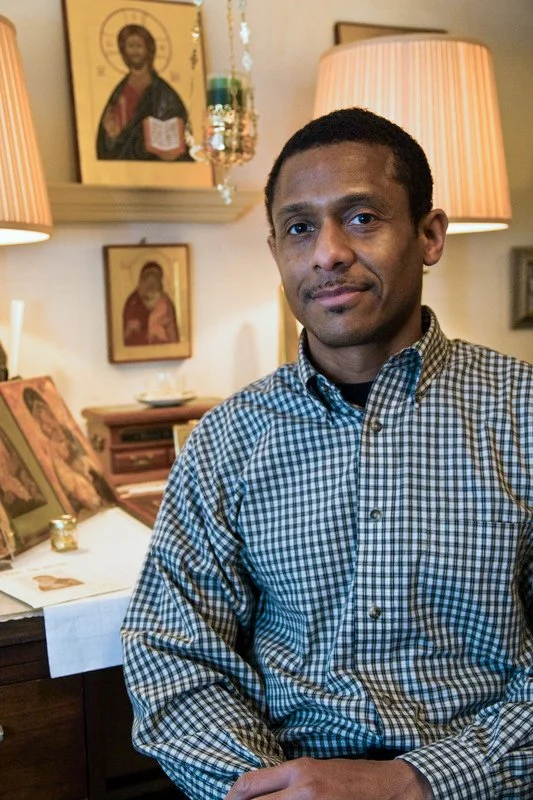
Figure 5: American iconographer Christopher Gosey, whose Ethiopian-style icon The Day of Pentecost is on view in the exhibition, describes icon painting as “an offering to God.”
I received my bachelor’s degree in Environmental Design from Texas A&M University in 1985 and immediately began my architectural career in Houston. Two of my most exciting projects as an architectural intern were the completion of drawings for St. Thomas and St. Gregorios Indian Orthodox Churches, both located in Houston, Texas. In 1987 I accepted a position as an intern architect in Boston at Goody Clancy & Associates, Architects. It was in Boston that I embraced Russian Orthodox Christianity in 1988 and eventually became exposed to Boston’s Ethiopian Orthodox Tewahedo Church.
After three years’ experience in the fields of historic preservation and church design, I made the transition to iconographer’s apprentice. This apprenticeship began under the renowned iconographer Ksenia Pokrovsky and was in the classical Moscow School of Russian icon painting. With much prompting from Ms. Pokrovsky, I began to make the Ethiopian Gondarine tradition of icon painting my primary focus. The Moscow School of Russian iconography is firmly grounded in and is an outgrowth of the Byzantine (Greek) iconographic tradition. Ethiopian iconography, however, is strongly Byzantine in style, but shows some characteristics of Western Religious Art.
As a result of working within the Gondarine tradition, my work has become more brilliantly colored, reflecting the traditional palette of Ethiopian painters. The palette consists mainly of cinnabar, yellow orpiment, charcoal black, white gypseous chalk and indigo blue.
I was initially drawn to Byzantine icon painting because of the peace that they exude. The individuals depicted in them are full of humility, and quiet adoration in the presence of a loving God. As I continued to learn about icons, I became particularly drawn to Ethiopian icons. Their bright and sometimes childlike quality seemed a potent reminder that unless we become as little children, full of trust, forgiveness, and innocence, we will not inherit the Kingdom of Heaven. As I began to paint icons, a whole new world of theological understanding opened up to me.
What materials and methods do you use in your work?
Instead of using casein paint, which is the traditional medium used in Ethiopian icon painting, I generally work in three different media: acrylic, modified encaustic, and egg tempera.
1) Acrylic. The Pentecost icon displayed in this exhibition uses an acrylic-based medium with naturally occurring mineral and earth-derived pigments. The technique, which is a modified version of the one made famous by the world-renowned Russian icon painters Andrey Rublyov and Dionysius, provides a rich palette of colors that maintain their vibrancy over the centuries. The pigments, usually prepared by me, are made by grinding natural stones or purifying clays. Some stones native to the local area in which the saint or saints lived and/or died are often ground and used in the painting of the icon.
2) Modified Encaustic. This medium is a modified version of the ancient encaustic method of painting which was famous throughout Egypt for the painting of funerary and imperial portraits. This method employs the use of hot pigmented wax that has been layered and “burned in” to a specially prepared wooden support (the Greek term encaustic literally means to “burn in”). The whole of the iconographic image is executed using pigmented wax sticks liquefied by dipping in turpentine. All of the clothing patterns and highlights are executed in casein paint which is derived from cow’s milk. After the inscriptions and halos are added, which are also of casein paint, then a thin layer of hot beeswax and copal resin is brushed over the whole icon’s face. The wax, after it begins to set, is then reheated to give a flat even finish. Finally, after a few hours, this finish is then hand-rubbed (with a soft chamois) to a highly polished enamel-like finish.
3) Egg Tempera. This medium uses egg-based tempera and naturally occurring mineral and earth-derived pigments. Like the acrylic method, this technique was made famous by Russian icon painters Andrey Rublyov and Dionysius. The pigments, usually prepared by the icon painters themselves, were made by grinding natural stones or purifying clays. The face of the icon is covered by the traditional varnish made of linseed oil and liquified copal resin.
You have spent time in Ethiopia. How has that experience affected your work?
My works of Ethiopian iconography stand at something of a historic and cultural divide between the Eastern and Western traditions of Christianity, a fact in keeping with the traditional Gondarine style in which I paint. This style is characterized by highly modeled faces, bright, exotic, and richly patterned clothing, and bold, loose use of black outlining. The Gondarine style, which is rich in the use of natural pigments, reached its height from the middle of the 17th to the middle of the 18th centuries.
Following that tradition, one major priority in my work is an allegiance to using colors that originate from the earth. Purified clays especially lend themselves to a rich palette of pigments. The countless and naturally occurring hues of green, red, and brown are very flexible in their ability to simultaneously impart the presence of rich, and sometimes bright, color alongside an earthy nature in the particular work.
I use a cornucopia of materials from the natural world, such as hand-ground pigments made from precious, semi-precious, and amphibole stones. Since my last visit to the Holy City of Aksum in Northern Ethiopia, I have begun grinding and using Aksumite gray granite in my iconography. In the future, I hope to begin introducing a new pigment derived from ground Red Volcanic Tuff from another important holy place within Ethiopia.
Because of their varying levels of translucency, as well as their distinct and unique qualities, these pigments impart a beauty that is beyond this world. I hope that by using these honest, true materials the viewer will come to know the Creator of the material world from which these substances come.
Would you like to receive a notification about new issues of Glencairn Museum News in your email inbox? If so, click here. A complete archive of past issues of Glencairn Museum News is available online here.