
Glencairn Museum News | Number 4, 2026
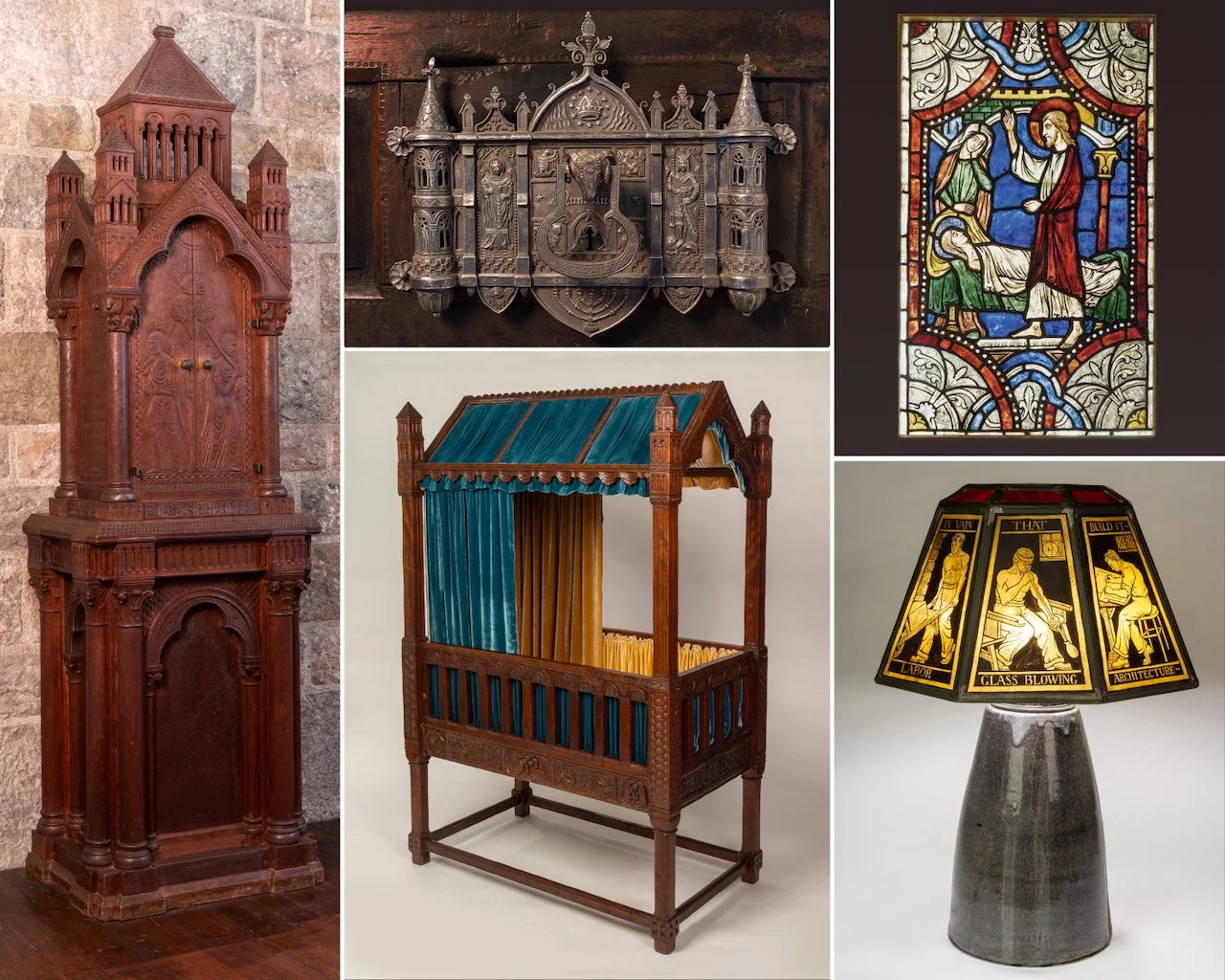
Eight works created for Bryn Athyn Cathedral and Glencairn are featured in the Philadelphia Museum of Art’s current exhibition Workshop of the World: Arts and Crafts in Philadelphia.
The Philadelphia Museum of Art’s exhibition Workshop of the World: Arts and Crafts in Philadelphia (through October 11, 2026) explores the Arts and Crafts movement in the Philadelphia region. The movement was, in part, a reaction against the industrial age, and sought to return to an appreciation of hand craftsmanship, the beauty of natural materials, and collaborative labor practices, such as the guilds of the medieval period. Bryn Athyn, Pennsylvania, is represented in the exhibition by eight works created in the workshops developed under the direction of Raymond Pitcairn, who oversaw the construction of Bryn Athyn Cathedral as well as Glencairn, his family’s Bryn Athyn home. Among them are Frank Jeck’s hand-carved infant crib made for Lachlan Pitcairn, stained-glass panels made for Bryn Athyn Cathedral by Winfred Sumner Hyatt and Lawrence Saint, and a Monel metal lock and handle forged by Parke Emerson Edwards.
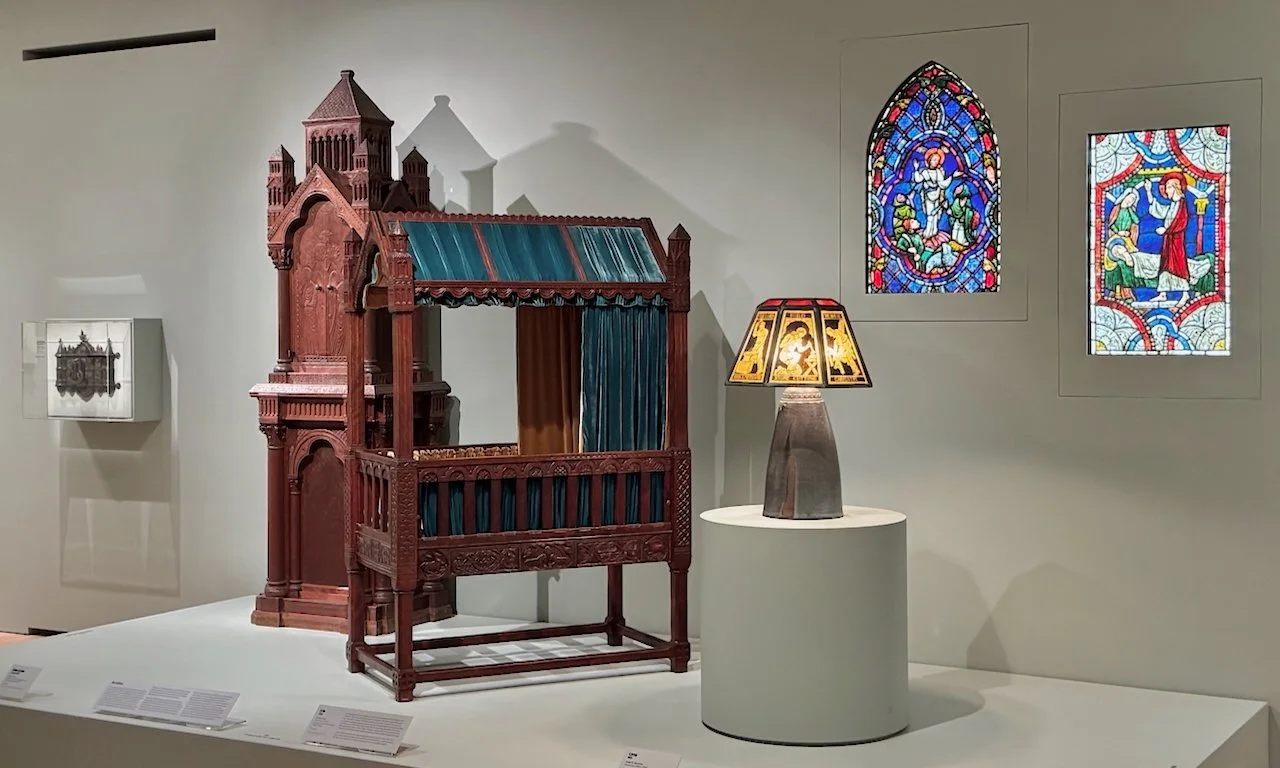
Figure 1: Works from the Glencairn Museum collection on view in Workshop of the World: Arts and Crafts in Philadelphia at the Philadelphia Museum of Art.
The Bryn Athyn objects are shown alongside other examples from Arts and Crafts workshops and communities in the region, including Rose Valley and New Hope in Pennsylvania and Arden in Delaware. This broader context helps place the work produced in Bryn Athyn within the Arts and Crafts movement, while also revealing the distinctive character of its own craft tradition.
Although Pitcairn embraced the Arts and Crafts movement’s emphasis on hand craftsmanship and collaborative work, his motivation was not primarily aesthetic or directed toward social reform. Instead, he saw the construction of Bryn Athyn Cathedral, begun in 1913, as an expression of his New Church (Swedenborgian Christian) faith and he brought artists and craftsmen from around the world to Bryn Athyn to realize that vision.
The Cathedral became one of the most ambitious Arts and Crafts projects in the Philadelphia region. Architect Ralph Adams Cram was the first to suggest the idea of a medieval-style guild system, which Pitcairn adopted and refined by establishing a series of workshops devoted to different crafts. More than 110 workers participated, producing everything from carved stone and woodwork to stained glass and metalwork. In 1922, Pitcairn established a glassworks on the Cathedral site, where artists and craftsmen worked together to develop their own designs and formulas for colored glass. Although Bryn Athyn did not produce glass for commercial sale, the glassworks established by Pitcairn became an important center for the revival of medieval stained-glass techniques. Among the artists who worked in Bryn Athyn were Winfred Hyatt, who designed the majority of the Cathedral’s windows, and Lawrence Saint, who later directed the stained-glass program at Washington National Cathedral. Pitcairn carried these same principles forward during the construction of Glencairn, built between 1928 and 1939. Using the workshops established for the Cathedral project, artisans and designers again worked side by side on site under his guidance.
Published to accompany the exhibition, the heavily illustrated hardcover catalog Workshop of the World: Arts and Crafts in Philadelphia presents nearly 400 pages of new scholarship by museum curators and historians of American decorative arts. The essays explore how artists, architects, designers, and craft communities in the Philadelphia region responded to industrialization by reviving traditional handcraft, and the catalog includes photographs and discussions of objects loaned by Glencairn Museum.
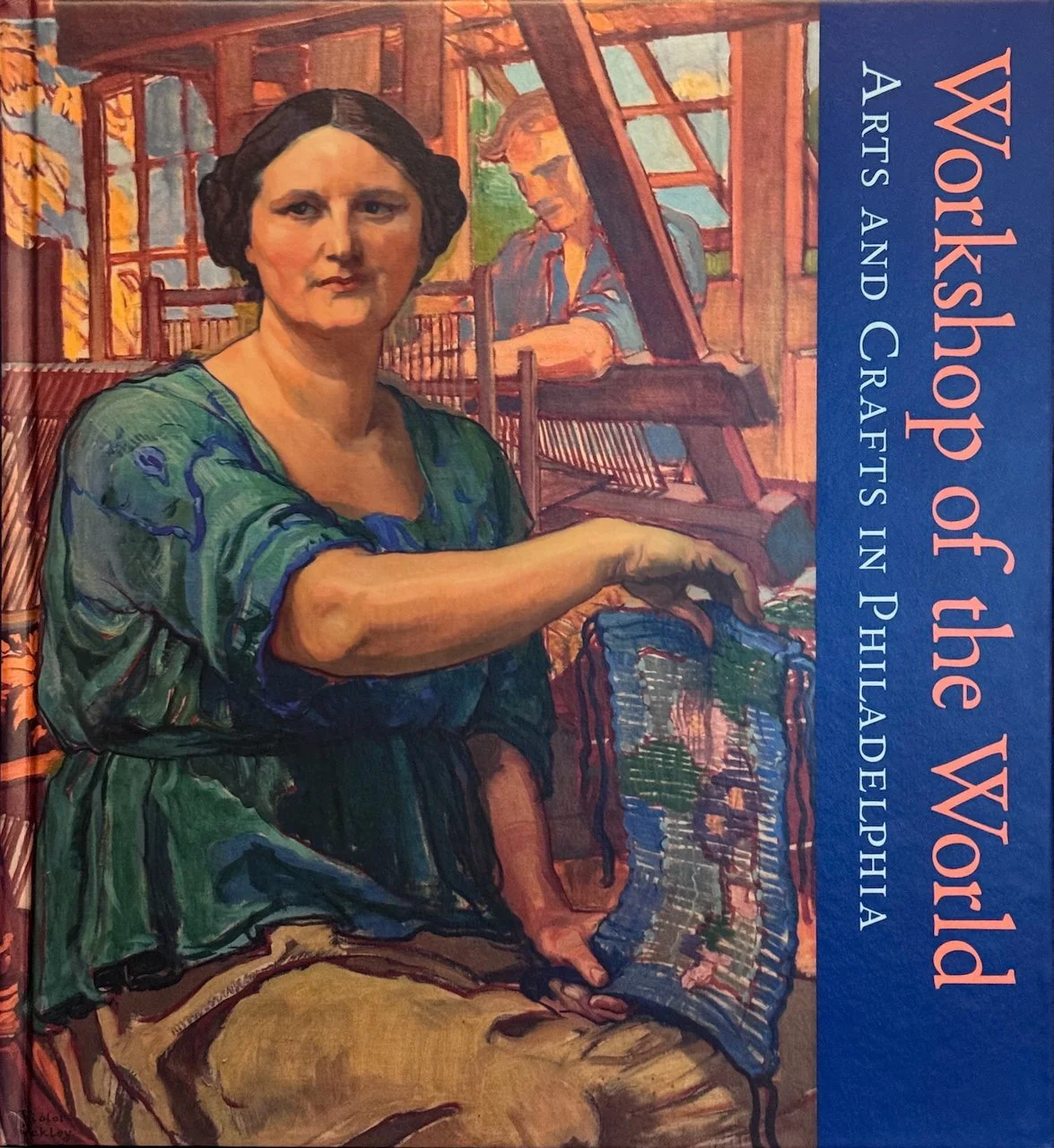
Figure 2: Workshop of the World: Arts and Crafts in Philadelphia, edited by David L. Barquist and Colin Fanning. Philadelphia Museum of Art, 2026.
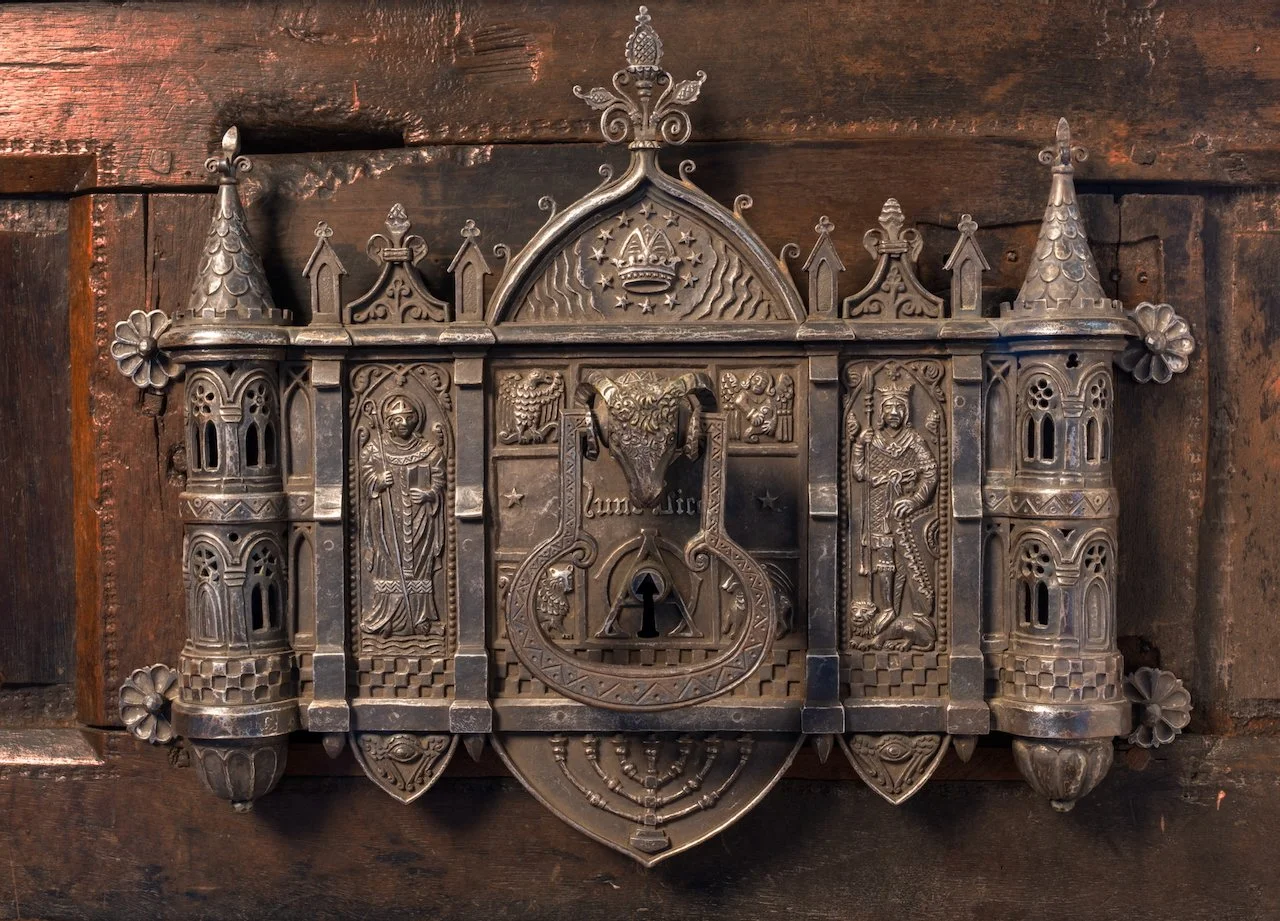
Figure 3: Monel Metal Lock, c. 1920–1940. Attributed to Parke Emerson Edwards, Bryn Athyn’s chief metal designer, this decorative lock is crafted from Monel, a durable nickel-copper alloy. Its central ram is surrounded by medieval-inspired imagery, including castle turrets, a crowned king in battle garb, and a bishop wearing a mitre and holding a crozier. The inscription “Nunc Licet” and several elements of the design—including the Alpha and Omega, the four “living creatures,” and the crown with twelve stars—refer to the Book of Revelation and have particular significance for the New Church.
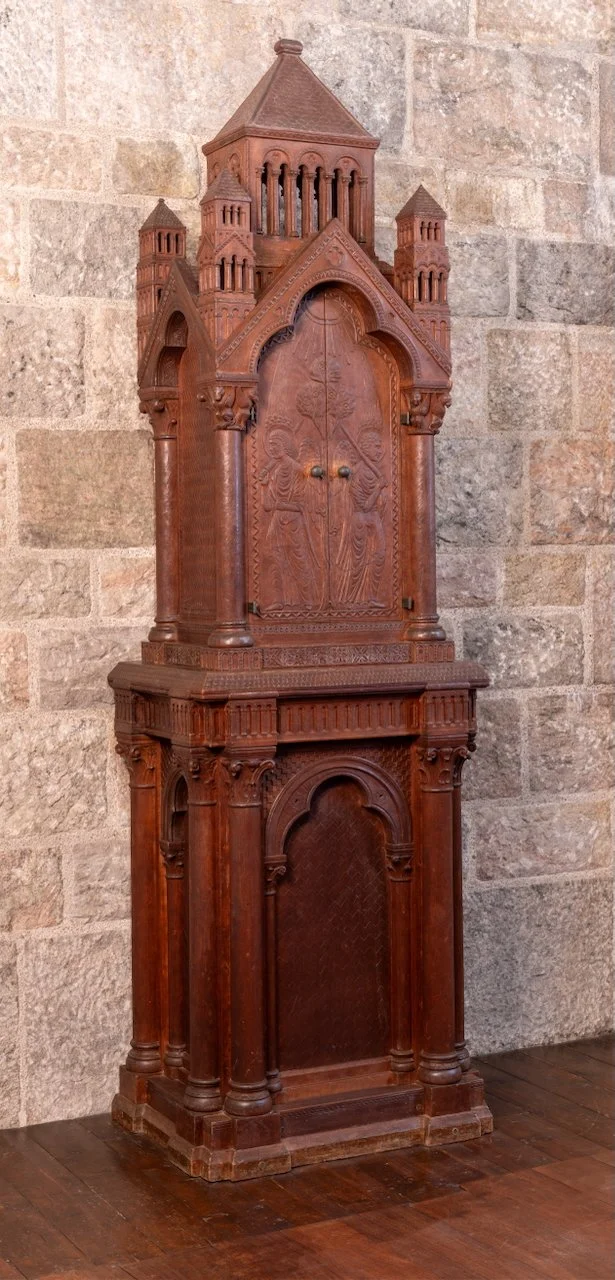
Figure 4: Bible Cabinet, c. 1926. Made by Frank Jeck for the Pitcairn family chapel on the fifth floor of Glencairn, this cherrywood cabinet features angels with flaming swords guarding the Garden of Eden (Genesis 3:24) and the four “living creatures” surrounding the throne of God (Revelation 4:7). This biblical imagery is echoed elsewhere in the chapel in stone and glass mosaic, creating a visual connection among the different forms of craftsmanship.
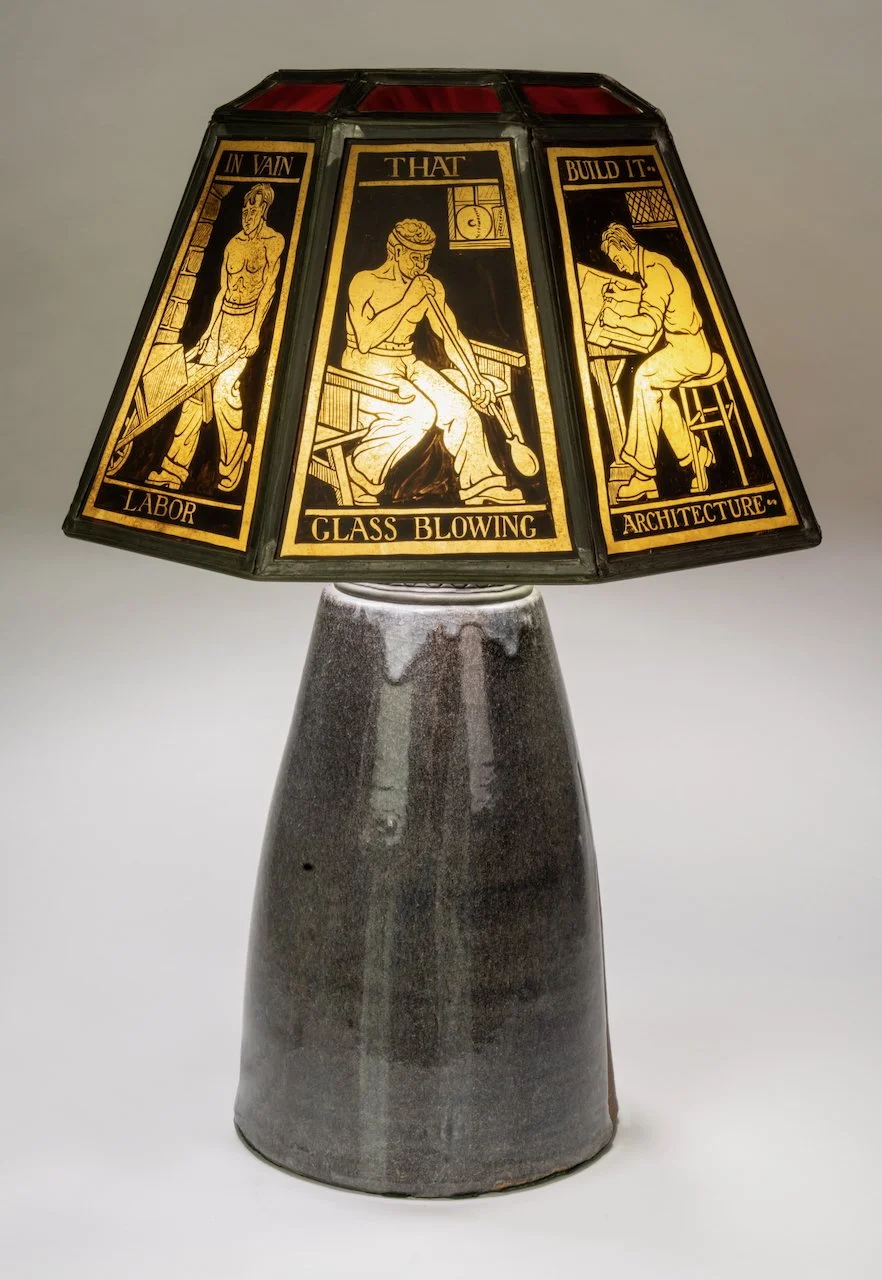
Figure 5: Craftsmen’s Lamp, c. 1938. Presented as a Christmas gift to Raymond and Mildred Pitcairn by the men who worked on Bryn Athyn Cathedral and Glencairn, this painted-glass lamp depicts the crafts and departments involved in their construction, including carpentry, wood carving, stone cutting, iron and metalwork, glassblowing, and architecture. Albert Cullen designed and painted the lamp, with glass made by Ariel Gunther and David Smith. The metalwork was designed and made under the direction of Parke Edwards. Its base is an inverted crucible once used to melt glass for stained-glass windows at the Cathedral and Glencairn. A biblical inscription reads, “Except the Lord build the house, they labor in vain that build it” (Psalm 127:1).
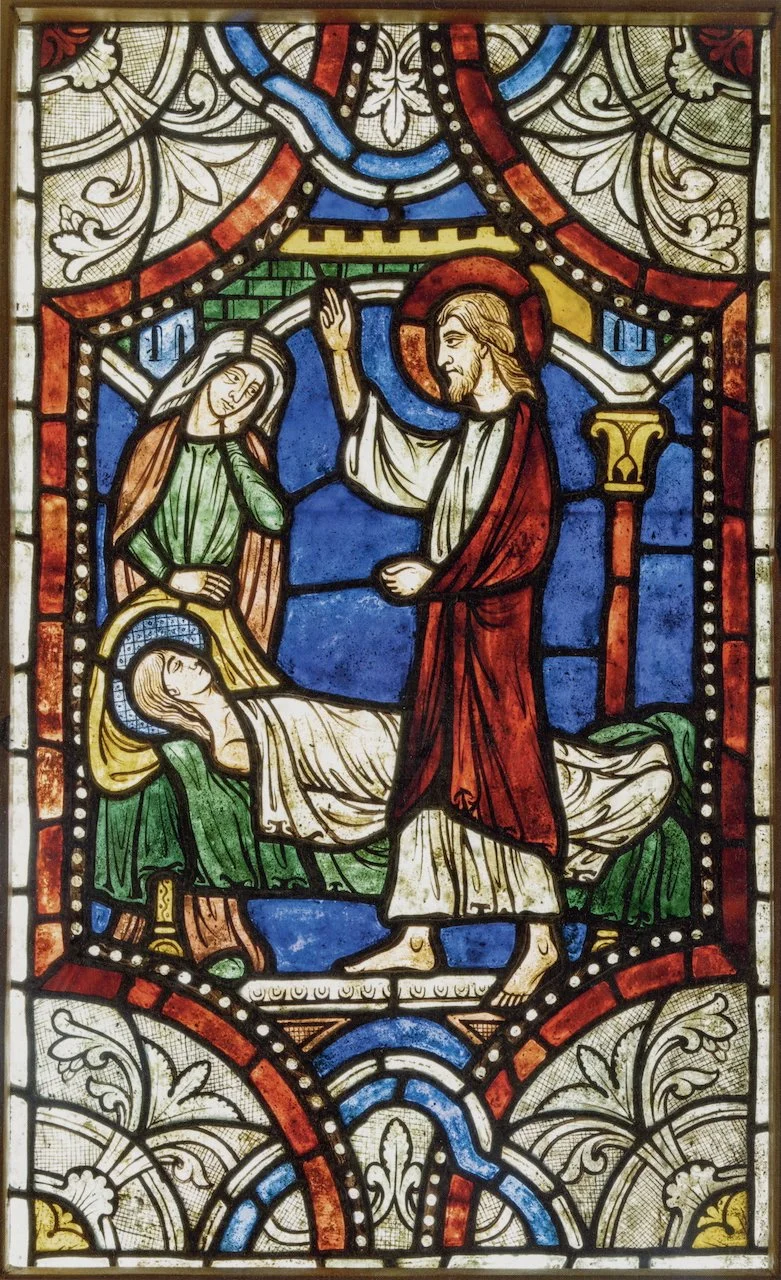
Figure 6: Christ Raising the Daughter of Jairus Window, c. 1925. Designed by Winfred Hyatt and made using glass produced in the Bryn Athyn glassworks, this stained-glass window depicts Christ raising the daughter of Jairus, an episode described in the Gospels of Matthew, Mark, and Luke. Hyatt designed the majority of the Cathedral’s stained-glass windows, drawing inspiration from medieval examples he studied in Europe and from works in Raymond Pitcairn’s own collection. The Bryn Athyn glassworks developed its own glass formulas in an effort to recreate the rich colors and textures of medieval stained glass.
After visiting Workshop of the World in Philadelphia, continue exploring the craftsmanship of Bryn Athyn with Glencairn Museum's guided tour Craftsmanship at Glencairn: Five Artists. Featuring the work of Parke Emerson Edwards, Robert Glenn, Winfred Hyatt, Frank Jeck, and Benjamin Tweedale, the tour introduces some of the artists whose craftsmanship shaped Glencairn, several of whom are also represented in the Philadelphia Museum of Art exhibition.